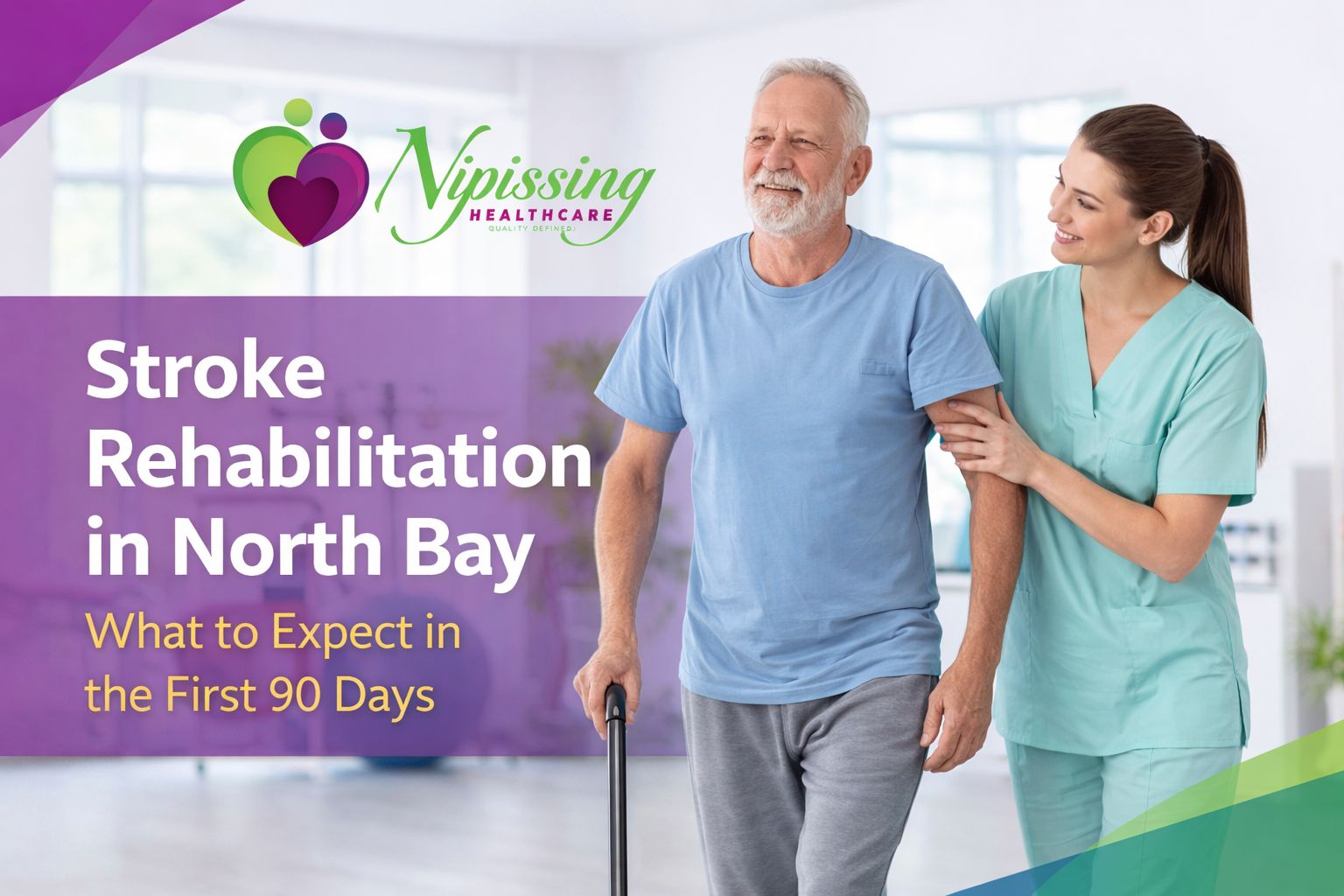
The first 90 days after a stroke are critical for neurological recovery. If you or a loved one is beginning stroke rehabilitation in North Bay, understanding what to expect can reduce uncertainty and improve outcomes.
At Nipissing Healthcare, our clinic-based neuro rehabilitation programs focus on restoring balance, mobility, coordination, and independence through structured, evidence-based care.
Why the First 90 Days After a Stroke Matter
Neuroplasticity — the brain’s ability to reorganize itself — is most active during the early recovery phase.
During this window:
- Motor relearning is accelerated
- Balance systems are retrained
- Functional independence improves faster
- Fall risk can be reduced early
Delaying rehabilitation may limit progress.
What Happens in Stroke Rehabilitation?
Initial Clinical Assessment
A comprehensive evaluation includes:
- Strength and coordination testing
- Gait and mobility assessment
- Balance screening
- Functional movement analysis
- Risk of falls evaluation
Each rehabilitation plan is individualized.
Early Mobility Training
Focus areas:
- Assisted standing
- Transfer training
- Gait re-education
- Upper limb functional retraining
Balance & Vestibular Rehabilitation
Post-stroke dizziness and instability are common.
Therapy includes:
- Static and dynamic balance drills
- Proprioceptive retraining
- Core stabilization
- Functional weight shifting
Common Challenges During Stroke Recovery
One-sided weakness (hemiparesis)
- Difficulty walking
- Reduced coordination
- Fatigue
- Speech or cognitive changes
- Fear of falling
Structured neuro rehabilitation reduces long-term disability.
How Long Does Stroke Rehabilitation Take?Recovery timelines vary.
Factors affecting duration:
- Severity of stroke
- Age
- Pre-existing health conditions
- Consistency of therapy
- Family support
Most patients benefit from ongoing therapy beyond the initial 90 days.
Role of Physiotherapy After Stroke
Physiotherapy focuses on:
- Muscle strengthening
- Gait retraining
- Postural correction
- Functional independence
- Safe mobility
Rehabilitation is not just exercise — it is targeted neurological retraining.
Supporting Independence at Home
Clinic-based therapy must be reinforced through:
- Structured home exercise programs
- Environmental safety adjustments
- Fall prevention strategies
- Caregiver education
Nipissing Healthcare provides guidance for safe home progression.
When to Seek Stroke Rehabilitation in North Bay
Seek immediate assessment if there is:
- Persistent weakness
- Balance instability
- Difficulty walking
- Frequent falls
- Reduced arm function
- Decline in daily independence
Early intervention significantly improves outcomes.
FAQs
1.When should stroke rehabilitation start?
Rehabilitation should begin as soon as medically stable.
2. How often should therapy be done after stroke?
Frequency depends on severity but structured sessions are essential early on.
3. Can balance improve after a stroke?
Yes, with targeted neuro rehabilitation.
4. Is physiotherapy enough after stroke?
Many patients require integrated neuro rehabilitation.
5. How long does it take to walk independently after stroke?
Recovery timelines vary based on neurological damage and therapy intensity.
6. Does stroke rehab help prevent falls?
Yes, fall risk reduction is a key focus.
Conclusion
Stroke recovery requires structured, progressive rehabilitation guided by clinical expertise. If you are seeking stroke rehabilitation in North Bay, early assessment can significantly improve mobility, balance, and independence outcomes.
Nipissing Healthcare provides clinic-led neuro rehabilitation and physiotherapy tailored to stroke recovery.
📞 705-667-1781
📍 36 Lakeshore Drive, North Bay
Schedule your neuro rehab consultation today.