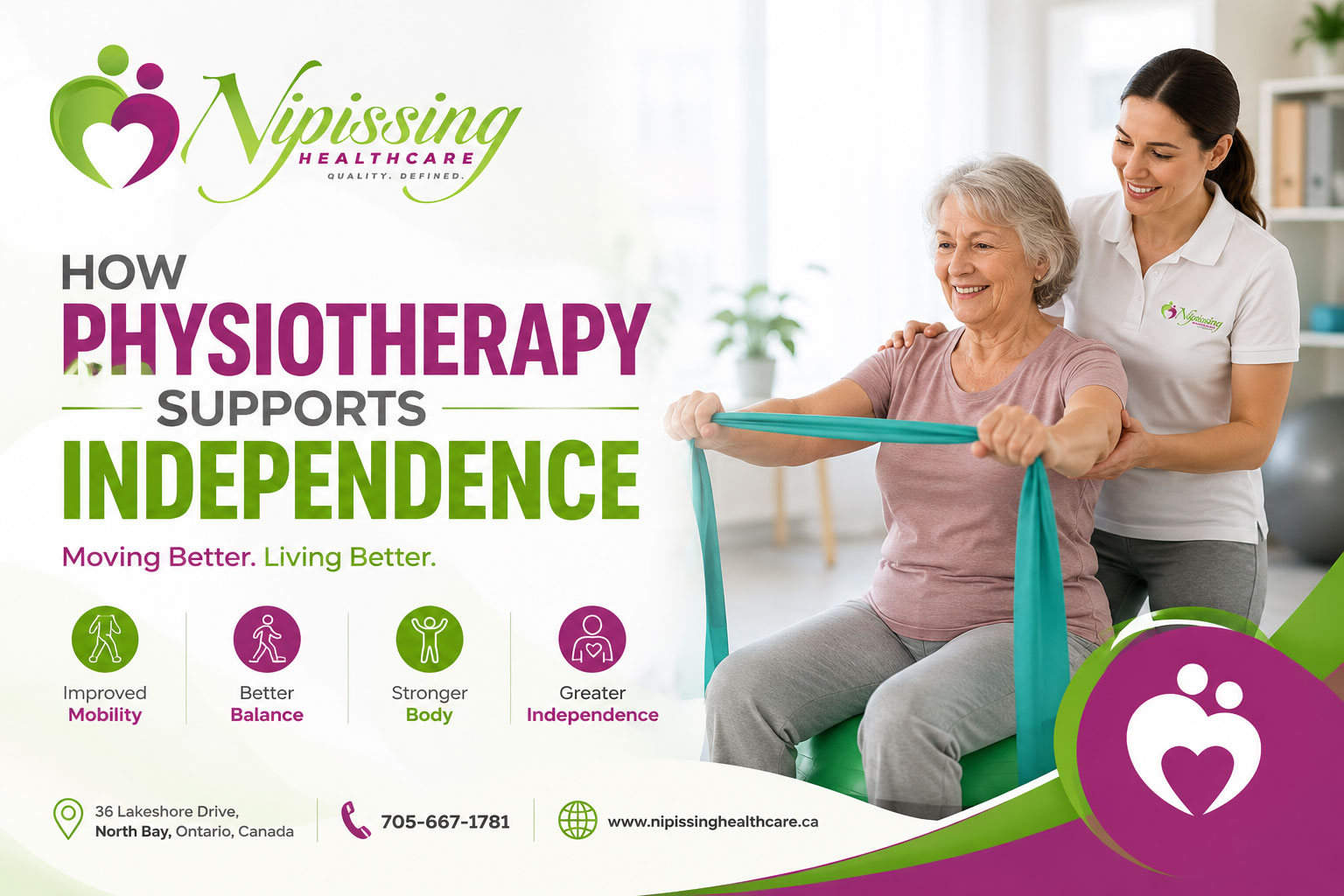
Independence means something different to every individual. For some, it means walking confidently around the neighbourhood. For others, it may be returning to work after an injury, climbing stairs without assistance, participating in recreational activities, or recovering after a stroke. Regardless of the journey, the ability to move safely and confidently plays an important role in maintaining health, wellbeing, and quality of life.
During Disability Pride Month, it is important to recognize that independence is not about doing everything alone—it is about having access to the right support, rehabilitation, and healthcare services that help individuals achieve their personal goals.
At Nipissing Healthcare, we believe physiotherapy is about more than treating pain. It is about restoring movement, improving function, and empowering individuals to participate fully in everyday life through evidence-based rehabilitation.
👉 Understanding Functional Independence
Functional independence refers to the ability to safely perform everyday activities without unnecessary limitations. These activities may include walking, getting in and out of bed, climbing stairs, preparing meals, driving, returning to work, or participating in hobbies and community events.
When mobility becomes limited due to injury, illness, neurological conditions, or chronic pain, even routine tasks can become challenging. Physiotherapy helps identify these limitations and develops personalized treatment plans that improve movement, strength, coordination, and confidence.
The goal is not simply to reduce pain but to restore the ability to perform meaningful daily activities with greater independence.
👉 How Physiotherapy Supports Everyday Independence
Physiotherapy combines clinical assessment, evidence-based treatment, and patient education to improve physical function and long-term health outcomes.
A physiotherapist evaluates how your body moves, identifies movement restrictions, and develops an individualized rehabilitation program based on your specific goals.
Treatment may include:
💕 Mobility Training
Improving walking patterns, joint movement, flexibility, and overall mobility allows individuals to move more comfortably and confidently throughout the day.
💕 Strength Development
Targeted exercises help rebuild muscle strength following injury, surgery, or periods of reduced activity, improving overall stability and function.
💕 Balance & Fall Prevention
Balance training helps reduce the risk of falls while improving coordination, posture, and confidence during everyday activities.
💕 Pain Management
Evidence-based physiotherapy techniques can help reduce pain associated with musculoskeletal conditions while encouraging healthy movement rather than avoiding activity.
👉 Conditions That Can Benefit From Physiotherapy
Physiotherapy supports people experiencing a wide range of conditions affecting movement and function.
These include:
- Stroke Rehabilitation
- Parkinson’s Disease
- Multiple Sclerosis
- Arthritis
- Chronic Pain
- Sports Injuries
- Back Pain
- Neck Pain
- Shoulder Injuries
- Knee Injuries
- Post-Surgical Rehabilitation
- Balance Disorders
- Neurological Conditions
Every condition requires an individualized approach. Personalized rehabilitation programs focus on improving mobility while helping individuals regain confidence in daily life.
👉 The Importance of Neuro Rehabilitation
Neurological conditions often affect movement, coordination, balance, and overall function.
Neuro rehabilitation focuses on helping individuals regain movement through structured, goal-oriented therapy.
Following conditions such as stroke, Parkinson’s disease, or acquired brain injury, rehabilitation may focus on:
- Walking safely
- Improving coordination
- Enhancing balance
- Increasing muscle control
- Building endurance
- Improving functional independence
Recovery looks different for every individual, but consistent rehabilitation often contributes to meaningful improvements in daily function and overall quality of life.
👉 Why Early Physiotherapy Matters
Many people delay seeking physiotherapy until pain becomes severe or movement becomes significantly restricted.
Early intervention often provides several benefits, including:
- Faster recovery
- Improved mobility
- Reduced pain
- Better movement patterns
- Lower risk of long-term complications
- Greater confidence in returning to everyday activities
Addressing movement concerns early may also help prevent compensatory movement patterns that can lead to additional problems over time.
👉 Rehabilitation Is About More Than Recovery
Physiotherapy is not only for people recovering from injuries.
It also plays an important role in:
- Preventing future injuries
- Maintaining mobility
- Supporting healthy aging
- Improving athletic performance
- Managing chronic health conditions
- Promoting long-term physical wellbeing
Whether someone wishes to continue gardening, participate in sports, return to work, or simply enjoy everyday life with greater comfort, rehabilitation provides practical strategies that support those goals.
👉 Disability Pride Month and Accessible Rehabilitation
Disability Pride Month recognizes the diversity, resilience, and achievements of people living with disabilities.
It also reminds us of the importance of creating environments where everyone has the opportunity to participate fully in their communities.
Accessible physiotherapy and rehabilitation help individuals improve function while supporting independence, participation, and quality of life.
At Nipissing Healthcare, we believe every person deserves individualized care that respects their goals, abilities, and unique rehabilitation journey.
👉 Practical Tips to Maintain Mobility
Simple habits can help support long-term movement and physical wellbeing.
Checklist
➨ Stay physically active within your comfort level.
➨ Address pain or mobility concerns early. Perform strengthening and balance exercises regularly.
➨ Maintain good posture during daily activities.
➨ Follow your physiotherapist’s home exercise program.
➨ Attend scheduled rehabilitation appointments.
➨ Continue moving even after pain has improved to maintain long-term progress.
👉 Supporting the North Bay Community
Maintaining mobility and independence helps individuals remain connected to their families, workplaces, and communities.
As a locally focused rehabilitation clinic, Nipissing Healthcare is proud to support residents throughout North Bay with evidence-based physiotherapy and rehabilitation services designed to improve movement, restore function, and promote long-term health.
Whether recovering from injury, managing a neurological condition, or improving balance and mobility, receiving rehabilitation close to home allows individuals to access ongoing care while remaining active within their community.
👉 Frequently Asked Questions
How can physiotherapy improve independence?
Physiotherapy improves mobility, strength, balance, coordination, and functional movement, making everyday activities easier and safer.
Who can benefit from physiotherapy?
People recovering from injury, surgery, neurological conditions, sports injuries, chronic pain, or mobility limitations may benefit from physiotherapy.
Is physiotherapy only for injuries?
No. Physiotherapy also supports healthy aging, injury prevention, neurological rehabilitation, chronic disease management, and long-term physical wellbeing.
How long does rehabilitation take?
Recovery timelines vary depending on the individual’s condition, goals, and overall health. A personalized assessment helps determine the most appropriate treatment plan.
Do I need physiotherapy if my pain is manageable?
Pain is only one indicator of physical health. Reduced mobility, weakness, balance concerns, or movement limitations may also benefit from assessment and rehabilitation.
👉 Conclusion
Independence is built through movement, confidence, and the ability to participate in everyday life.
Physiotherapy provides more than symptom relief—it supports long-term recovery, improves physical function, and helps individuals achieve meaningful goals through evidence-based rehabilitation.
Whether recovering from injury, managing a neurological condition, or looking to improve mobility, personalized physiotherapy can help people move with greater confidence and enjoy a better quality of life.
👉 Call to Action
If you’re experiencing pain, recovering from an injury, or looking to improve your mobility and independence, the team at Nipissing Healthcare is here to help.
Our personalized physiotherapy and rehabilitation programs are designed to support your recovery goals through evidence-based care.
Book an assessment today and take the next step toward moving with confidence.
Link this article internally to: