
Balance is something most people rarely think about—until it begins to change.
Perhaps you’ve noticed yourself reaching for furniture while walking, feeling less confident on stairs, avoiding uneven sidewalks, or feeling slightly unsteady when getting out of bed. These changes may seem minor at first, but they often signal that something deeper is affecting your body’s ability to maintain stability.
Many people assume balance problems are simply a normal part of getting older. While aging can contribute to changes in strength and coordination, frequent unsteadiness, dizziness, or fear of falling should never be dismissed as inevitable.
Good balance depends on several systems working together. Your muscles, joints, vision, inner ear, nervous system, and brain constantly communicate to help you stay upright and move safely. When one of these systems isn’t functioning properly, your balance can be affected.
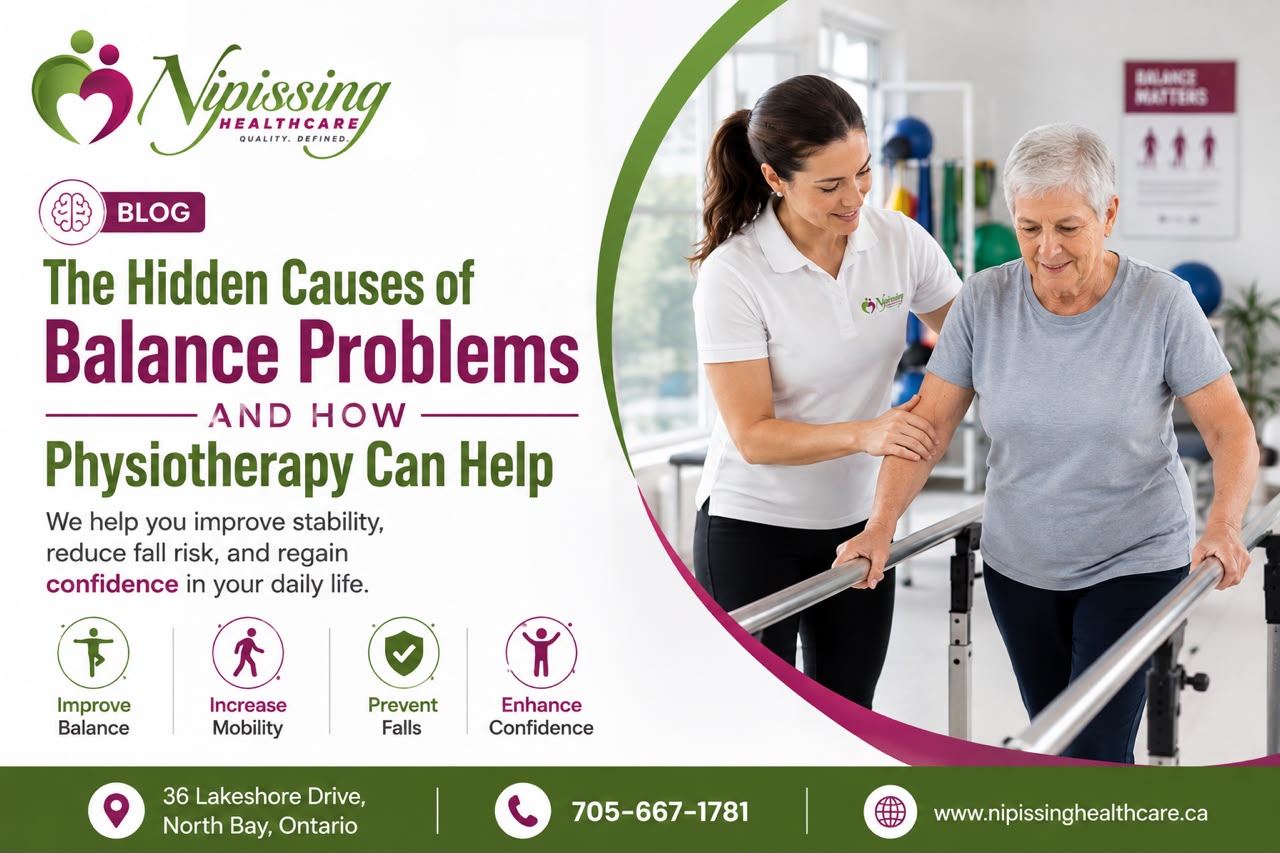
At Nipissing Healthcare, our physiotherapists use evidence-based assessment techniques to identify the underlying causes of balance problems and create personalized rehabilitation programs that improve stability, mobility, confidence, and independence.
If you’ve been feeling less steady lately, here are some of the hidden reasons why—and how physiotherapy can help.
Understanding How Balance Works
Many people think balance comes only from strong legs.
In reality, balance is the result of several body systems working together every second you’re standing or walking.
These include:
- Your muscles
- Your joints
- Your inner ear (vestibular system)
- Your eyes
- Your brain
- Your nervous system
Even a small problem affecting one of these systems can lead to noticeable changes in stability.
When balance begins to decline, your body often compensates without you realizing it. You may walk slower, shorten your stride, avoid stairs, or become less physically active.
Over time, these changes can increase weakness and make balance even worse.
Balance Is a Skill That Can Be Improved
Many causes of poor balance respond well to physiotherapy.
Through targeted exercises and movement training, balance can often improve significantly, helping people regain confidence and continue enjoying everyday activities safely.
Hidden Cause #1 – Muscle Weakness
One of the most common causes of balance problems is reduced muscle strength.
Strong muscles in the legs, hips, core, and ankles help keep the body stable during movement.
When these muscles become weak, simple activities such as standing from a chair, climbing stairs, or walking on uneven ground become more difficult.
Muscle weakness may develop because of:
- Physical inactivity
- Aging
- Surgery
- Injury
- Chronic pain
- Neurological conditions
A physiotherapist identifies areas of weakness and develops a progressive strengthening program tailored to your abilities.
Stronger Muscles Mean Better Stability
Improving strength doesn’t just make walking easier.
It also improves reaction time, posture, coordination, and your body’s ability to recover from unexpected slips or trips.
Hidden Cause #2 – Reduced Joint Mobility
Stiff joints don’t just cause discomfort—they also affect balance.
Limited movement in the ankles, knees, hips, or spine can alter the way you walk and reduce your body’s ability to adjust during movement.
Common causes include:
- Arthritis
- Previous injuries
- Joint replacements
- Inflammation
- Prolonged inactivity
Physiotherapy combines mobility exercises, stretching, and movement retraining to restore healthier joint function.
Better Mobility Supports Better Balance
When joints move more freely, walking becomes smoother, posture improves, and everyday movements require less effort.
This allows individuals to move with greater confidence while reducing unnecessary strain on surrounding muscles.
Hidden Cause #3 – Inner Ear (Vestibular) Disorders
Your inner ear plays a vital role in maintaining balance. It continuously sends information to your brain about your head position and movement, helping your body stay upright.
When this system isn’t functioning properly, you may experience:
- Dizziness
- Vertigo
- Feeling lightheaded
- Unsteadiness while walking
- Difficulty turning quickly
- Feeling off-balance in busy environments
These symptoms can significantly impact daily life and often lead people to avoid activities they once enjoyed.
Physiotherapists trained in vestibular rehabilitation can assess how your balance system is functioning and prescribe exercises that help your brain adapt, improving stability and reducing dizziness over time.
Balance Begins with Understanding the Cause
Not all dizziness has the same cause.
A detailed assessment helps determine whether your symptoms are related to your vestibular system, musculoskeletal issues, neurological conditions, or other contributing factors, allowing treatment to be tailored to your specific needs.
Hidden Cause #4 – Neurological Conditions
The brain and nervous system play a central role in coordinating movement, posture, and balance.
Conditions affecting these systems may interfere with the body’s ability to process movement and maintain stability.
Some examples include:
- Stroke
- Parkinson’s disease
- Multiple sclerosis
- Peripheral neuropathy
- Brain injuries
Individuals living with neurological conditions often experience reduced coordination, slower reaction times, muscle weakness, or changes in walking patterns.
Evidence-based neurological rehabilitation focuses on improving movement, increasing independence, and helping individuals perform everyday activities with greater confidence.
Neurological Rehabilitation Is About Progress
Recovery doesn’t always happen overnight.
Small improvements in walking, standing, transferring, or performing everyday tasks can make a meaningful difference in quality of life.
Physiotherapy focuses on achievable goals that build confidence and promote long-term independence.
Hidden Cause #5 – Fear of Falling
One of the most overlooked causes of declining balance isn’t physical—it’s psychological.
After experiencing a fall or even a near-fall, many people naturally become more cautious.
They may begin to:
- Walk less
- Avoid stairs
- Skip social activities
- Stop exercising
- Stay indoors more often
Unfortunately, reduced activity leads to weaker muscles, poorer endurance, and decreased balance, creating a cycle that increases the risk of future falls.
Physiotherapy helps break this cycle through supervised balance training, strengthening exercises, and confidence-building strategies.
Confidence Is Part of Rehabilitation
Improving balance isn’t only about preventing falls.
It’s about helping people feel confident enough to enjoy daily life again—whether that’s walking outdoors, shopping independently, visiting family, or participating in hobbies.
How Physiotherapy Improves Balance
Physiotherapy doesn’t simply teach balance exercises.
Treatment begins with understanding why your balance has changed.
After a comprehensive assessment, your physiotherapist develops a personalized rehabilitation program that may include:
- Balance retraining
- Strengthening exercises
- Gait (walking) training
- Flexibility exercises
- Functional movement practice
- Vestibular rehabilitation
- Fall prevention education
- Home exercise programs
Every treatment plan is tailored to your individual abilities and goals, progressing safely as your confidence and mobility improve.
Every Rehabilitation Journey Is Different
No two people experience balance problems in the same way.
Someone recovering after surgery requires a different rehabilitation program than someone managing Parkinson’s disease or recovering from a stroke.
Personalized care ensures rehabilitation remains safe, effective, and meaningful throughout the recovery journey.
👉Everyday Habits That Support Better Balance
Improving balance isn’t limited to clinic visits.
Simple daily habits can help maintain mobility and reduce the likelihood of falls.
These include:
- Staying physically active
- Strengthening your legs and core
- Wearing supportive footwear
- Keeping walkways free from clutter
- Improving lighting at home
- Using handrails where available
- Following your prescribed home exercise program
Consistency is one of the most important factors in maintaining long-term improvements.
👉 Practical Tips / Checklist
✔️ Stay active every day, even with light walking or gentle exercises.
✔️ Don’t ignore dizziness or persistent unsteadiness.
✔️ Strengthen your legs and core regularly.
✔️ Practice balance exercises under professional guidance.
✔️ Keep your home safe by removing trip hazards.
✔️ Wear supportive footwear indoors and outdoors.
✔️ Schedule a physiotherapy assessment if balance changes are affecting your confidence or daily activities.
👉 Supporting Safer Movement in North Bay
At Nipissing Healthcare, we understand how balance problems can affect every aspect of daily life—from walking confidently to maintaining independence.
Our experienced physiotherapy team provides evidence-based assessments and personalized rehabilitation programs designed to improve stability, mobility, strength, and confidence.
Whether you’re recovering from surgery, managing a neurological condition, or simply noticing changes in your balance, we’re here to help you move safely and confidently.
Proudly serving North Bay and surrounding communities, we are committed to helping individuals maintain active, independent lifestyles through compassionate, evidence-based care.
👉 Frequently Asked Questions
✏️ Are balance problems a normal part of aging?
While some physical changes occur with age, frequent balance problems or falls should never be considered normal. A physiotherapy assessment can identify treatable causes.
✏️ Can physiotherapy improve balance?
Yes. Physiotherapy improves balance by strengthening muscles, improving coordination, restoring mobility, and retraining movement patterns based on your individual needs.
✏️ What causes dizziness while walking?
Dizziness may result from vestibular disorders, neurological conditions, low blood pressure, medication side effects, or musculoskeletal problems. A professional assessment helps determine the underlying cause.
✏️ Can physiotherapy help prevent falls?
Absolutely. Fall prevention is one of the primary goals of physiotherapy, especially for older adults and individuals recovering from injury or neurological conditions.
✏️ When should I seek help for balance problems?
If you’re feeling unsteady, have experienced a fall, frequently lose your balance, or avoid activities because you’re worried about falling, it’s a good idea to schedule a physiotherapy assessment.
👉 Conclusion
Balance problems often develop gradually, making them easy to overlook until they begin affecting daily life.
Whether the cause is muscle weakness, joint stiffness, a neurological condition, or changes in the vestibular system, early assessment and treatment can make a significant difference.
With evidence-based physiotherapy, it’s possible to improve balance, regain confidence, reduce the risk of falls, and continue enjoying an active, independent lifestyle.
👉 Book Your Balance Assessment
If you’ve noticed changes in your balance, walking, or confidence while moving, don’t wait for a fall to happen.
At Nipissing Healthcare, our experienced physiotherapy team provides personalized, evidence-based rehabilitation to help you move with greater confidence and independence.
Book your balance assessment today and take the first step toward safer movement.
📍 36 Lakeshore Drive, North Bay, Ontario