
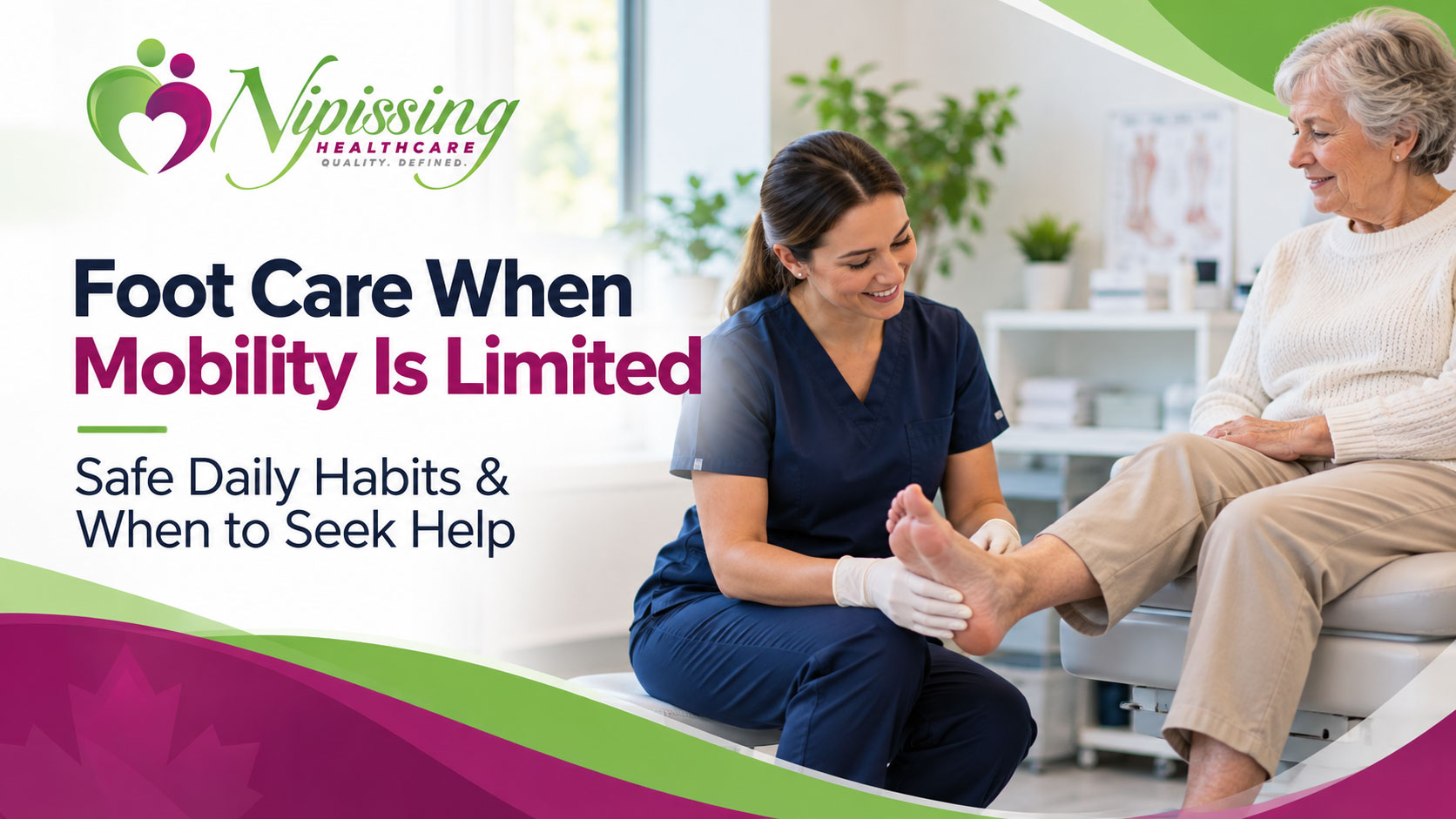
Looking after your feet is an important part of maintaining comfort, mobility and independence. However, routine foot care can become more difficult when bending, standing, reaching or walking is uncomfortable.
For some people, thick toenails become harder to trim. Others struggle to inspect the soles of their feet, manage dry skin or choose footwear that feels comfortable. Reduced flexibility, balance difficulties and certain health conditions can make these everyday tasks more challenging.
The solution is not to ignore foot health or attempt difficult procedures without assistance. Understanding safe daily practices and recognising when professional support is appropriate can help you make informed decisions about your care.
At Nipissing Healthcare, Foot Care is one of the clinic’s approved services in North Bay, Ontario. This guide explains how limited mobility can affect foot care, practical steps you can take, and when professional assessment may be necessary.
➔ Quick Answer: How Can You Maintain Foot Health When Mobility Is Limited?
☑️ The short answer
Inspect your feet regularly, keep them clean and dry, wear comfortable footwear and avoid attempting to cut thick nails or remove calluses aggressively. If reaching your feet is difficult, consider professional assistance with routine foot care.
If you have diabetes, reduced sensation or circulation problems, follow your healthcare team’s foot-care advice and seek prompt guidance about new wounds, blisters or signs of infection.
☑️ Key takeaway
Foot care should be safe, manageable and suited to your individual health needs. If routine care becomes difficult or a foot concern persists, professional support may help you determine the appropriate next step.
☑️ Why Does Limited Mobility Make Foot Care Difficult?
Foot care involves more than washing your feet or trimming your toenails. It requires flexibility, coordination, balance, adequate vision and the ability to reach different parts of your feet safely.
When one or more of these abilities becomes limited, routine care can become uncomfortable or risky.
☑️ Difficulty bending and reaching
Stiffness, reduced flexibility or discomfort when bending can make it difficult to reach the toes and inspect the soles of the feet.
Trying to force an uncomfortable position may increase the risk of losing balance or injuring yourself.
☑️ Balance difficulties while standing
Standing on one leg or leaning forward to reach your feet can be difficult for someone with balance concerns.
A safer approach is to avoid unsupported positions and choose a stable sitting position for routine inspection when possible.
☑️ Changes in strength and coordination
Reduced strength or coordination can make nail trimming, applying moisturiser or managing footwear more challenging.
If these tasks are becoming difficult, assistance may be safer than repeatedly attempting them alone.
☑️ Changes in eyesight or sensation
Poor eyesight can make it harder to notice small cuts, redness or changes in nail appearance. Reduced sensation may mean that an injury is not immediately painful.
Regular inspection and appropriate professional guidance become particularly important when these difficulties are present.
➔ Seven Practical Foot Care Habits for People With Limited Mobility
☑️ 1. Inspect your feet regularly
Look at your toenails, heels, soles and the skin between your toes. Check for cracks, blisters, redness, swelling, unusual discolouration or other changes.
If you cannot see the soles of your feet easily, use a mirror or ask a trusted person to help you inspect them.
☑️ 2. Keep your feet clean and dry
Wash your feet gently and dry them carefully, including between the toes. Avoid leaving moisture trapped between the toes.
If your skin is dry, an appropriate moisturiser may help. Avoid applying it between the toes if it causes the area to remain damp.
☑️ 3. Choose comfortable footwear
Select shoes that fit securely without squeezing your toes. Adequate toe room can help reduce unnecessary pressure and friction.
Check the inside of your shoes for rough seams, objects or damaged areas that could irritate the skin.
If the same area repeatedly becomes sore, seek advice about the possible cause.
☑️ 4. Avoid cutting thick toenails yourself if it is unsafe
Thickened or brittle nails can be difficult to trim, particularly when reaching the feet is challenging.
Do not force nail clippers through a thick nail or cut into the surrounding skin. If you cannot manage nail care safely, ask about appropriate professional assistance.
☑️ 5. Do not cut or aggressively scrape calluses
Calluses develop when repeated pressure or friction causes the skin to thicken. Cutting them with a blade or using strong removal products can cause injury.
This is particularly important for people with diabetes, reduced sensation or circulation problems. Seek appropriate professional advice instead.
☑️ 6. Check your footwear before walking
Look inside your shoes for objects, rough edges or areas that may rub against your feet.
Make sure your footwear is appropriate for the activity and does not create avoidable pressure.
☑️ 7. Ask for assistance when routine care becomes difficult
If you cannot reach your feet comfortably, struggle to trim your nails or have concerns about your balance while performing foot care, do not wait until the task becomes unmanageable.
Professional assistance may help you maintain routine foot hygiene while identifying concerns that need further assessment.
➔ Common Foot Concerns That Deserve Attention
☑️ Thick or difficult-to-trim toenails
Toenails can become thicker because of ageing, repeated pressure, previous injury or a fungal infection. Thickening alone does not confirm an infection.
If a nail changes significantly, becomes painful or is difficult to manage safely, seek appropriate advice.
☑️ Dry, cracked or irritated skin
Dry skin can become uncomfortable, and cracks may create openings in the skin. Inspect your heels and other areas that commonly become dry.
Deep cracks, bleeding or signs of infection should not be treated as routine dryness.
☑️ Calluses and areas of repeated pressure
Calluses often form beneath the forefoot, around the heel or on the toes. They may indicate repeated pressure or friction.
If a callus repeatedly develops in the same location, consider whether footwear or another pressure-related factor may be contributing.
☑️ Foot discomfort that affects walking
Foot discomfort can change how a person stands, walks or distributes weight. This may make daily movement more difficult.
Persistent or worsening discomfort should be assessed rather than managed only by changing how you walk.
➔ Who May Benefit From Professional Foot Care?
☑️ Older adults
Reduced flexibility, changes in eyesight or difficulty bending can make routine nail and skin care challenging.
Professional assistance may be appropriate when ordinary foot care can no longer be performed safely.
☑️ People with limited mobility
People experiencing stiffness, weakness, balance difficulties or movement limitations may struggle to reach their feet.
Support can be considered when these difficulties interfere with routine care or create a risk of injury.
☑️ People living with diabetes
Diabetes can increase the risk of foot complications, particularly when nerve damage or circulation problems are present.
Follow your healthcare team’s recommendations, inspect your feet regularly and seek prompt advice about new wounds, blisters or signs of infection. Avoid cutting calluses or attempting to manage concerning changes yourself.
☑️ People who struggle with routine nail care
If thick nails or reduced flexibility make trimming difficult, professional assistance may be safer than trying to manage the problem with unsuitable tools.
The appropriate service depends on the person’s health history, symptoms and individual needs.
➔ What to Expect From a Professional Foot Care Appointment
☑️ Discuss your needs and concerns
Explain what has become difficult, how long the concern has been present and whether you have experienced pain, skin changes or difficulty walking.
Mention relevant health conditions, previous injuries, reduced sensation or circulation problems.
☑️ Review the concern and suitability for care
The provider can review the concern within their scope of practice and determine whether routine foot care is appropriate.
Some symptoms require assessment by a physician or another suitably qualified healthcare professional rather than routine foot care alone.
☑️ Receive appropriate routine support
Where suitable and within the provider’s scope, routine care may include assistance with nail maintenance and callus-related concerns.
The approach should reflect the individual’s needs and risk factors.
☑️ Understand the next steps
You may receive practical guidance about foot hygiene, footwear, monitoring changes and when to seek further assessment.
Ask questions if you are unsure how to manage your foot health safely between appointments.
➔ When Should You Seek Medical Attention?
Routine foot care is not a substitute for medical assessment when concerning symptoms develop.
Seek prompt medical advice if you notice increasing pain, redness, warmth, swelling, drainage, a new wound, a blister that is not healing or an unexplained change in nail or skin colour.
People with diabetes, reduced sensation or circulation problems should contact their healthcare team promptly about new foot concerns rather than waiting for a routine appointment.
Sudden severe pain, rapidly changing skin colour or temperature, or signs of a serious infection require urgent medical assessment.
➔ Foot Care in North Bay: Finding the Right Support
If limited mobility is making routine foot care difficult, choosing an appropriate service can help you understand what support is available.
When comparing providers, consider their qualifications, the services they actually offer, hygiene practices and how they handle concerns that require further medical assessment.
Nipissing Healthcare provides Foot Care in North Bay, Ontario, for individuals who need assistance with routine foot health and ongoing foot-related concerns.
The clinic also provides Physiotherapy and Neuro Rehab. If movement or balance difficulties are affecting daily activities, ask the clinic which of its services may be appropriate for your needs.
Nipissing Healthcare
36 Lakeshore Drive, North Bay, Ontario
Phone: 705-667-1781
Website: https://nipissinghealthcare.ca/
➔ Frequently Asked Questions About Foot Care and Limited Mobility
☑️ How often should I inspect my feet?
Regular inspection helps you notice changes early. People with diabetes or other risk factors should follow the frequency recommended by their healthcare team.
☑️ What should I do if I cannot reach my toenails?
Avoid awkward positions or forceful trimming. Consider appropriate professional foot care if you cannot reach your nails safely.
☑️ Can thick toenails be a sign of a fungal infection?
They can be, but thickening may also result from ageing, pressure or injury. A thick nail alone does not confirm a fungal infection.
☑️ Should I remove calluses at home?
Avoid cutting calluses with blades or using strong chemical removal products without professional guidance. People with diabetes, reduced sensation or circulation problems should be especially cautious.
☑️ Can footwear affect foot health?
Yes. Poorly fitting shoes can create pressure and friction, contributing to discomfort, irritation and callus formation. Comfortable footwear with adequate toe room can help reduce these problems.
☑️ Can limited mobility increase the risk of foot problems?
It can make inspection, hygiene and nail care more difficult. Concerns may go unnoticed when someone cannot easily reach or see their feet, so appropriate assistance can be valuable.
☑️ When should someone with diabetes seek help for a foot concern?
Contact your healthcare team promptly about a new wound, blister, suspected infection or unexplained change. Do not attempt to cut away calluses or treat concerning changes yourself.
☑️ Where can I find Foot Care in North Bay?
Nipissing Healthcare offers Foot Care at 36 Lakeshore Drive, North Bay, Ontario. Contact the clinic to discuss your needs and confirm whether its service is suitable.
➔ Practical Foot Care Checklist
☑️ Daily and routine habits
- Inspect your feet and toenails for changes.
- Keep your feet clean and dry.
- Wear comfortable, well-fitting footwear.
- Avoid cutting calluses or aggressively trimming thick nails.
- Ask for help if reaching your feet is difficult.
☑️ When to seek professional support
- Routine nail care has become difficult.
- Calluses repeatedly return or cause discomfort.
- Mobility limitations make foot care unsafe.
- You notice persistent changes in the skin or nails.
☑️ When to seek prompt medical advice
- A wound, blister or suspected infection develops.
- Pain, redness, swelling or drainage increases.
- You have diabetes or reduced sensation and notice a new foot concern.
➔ Conclusion
Foot care can become more challenging when flexibility, strength, balance or eyesight changes. However, safe daily habits, appropriate footwear and timely assistance can help people manage routine foot health more confidently.
Avoid risky nail trimming or callus removal, and do not ignore wounds, infections or unusual changes. When routine care becomes difficult, professional support may help you determine the most appropriate next step.
Nipissing Healthcare offers Foot Care in North Bay for individuals who need assistance with routine foot health and ongoing concerns.
➔ Need Help With Routine Foot Care?
Contact Nipissing Healthcare to discuss your foot-care needs and confirm whether its service is appropriate for you.
Call: 705-667-1781
Visit: 36 Lakeshore Drive, North Bay, Ontario
Website: https://nipissinghealthcare.ca/