
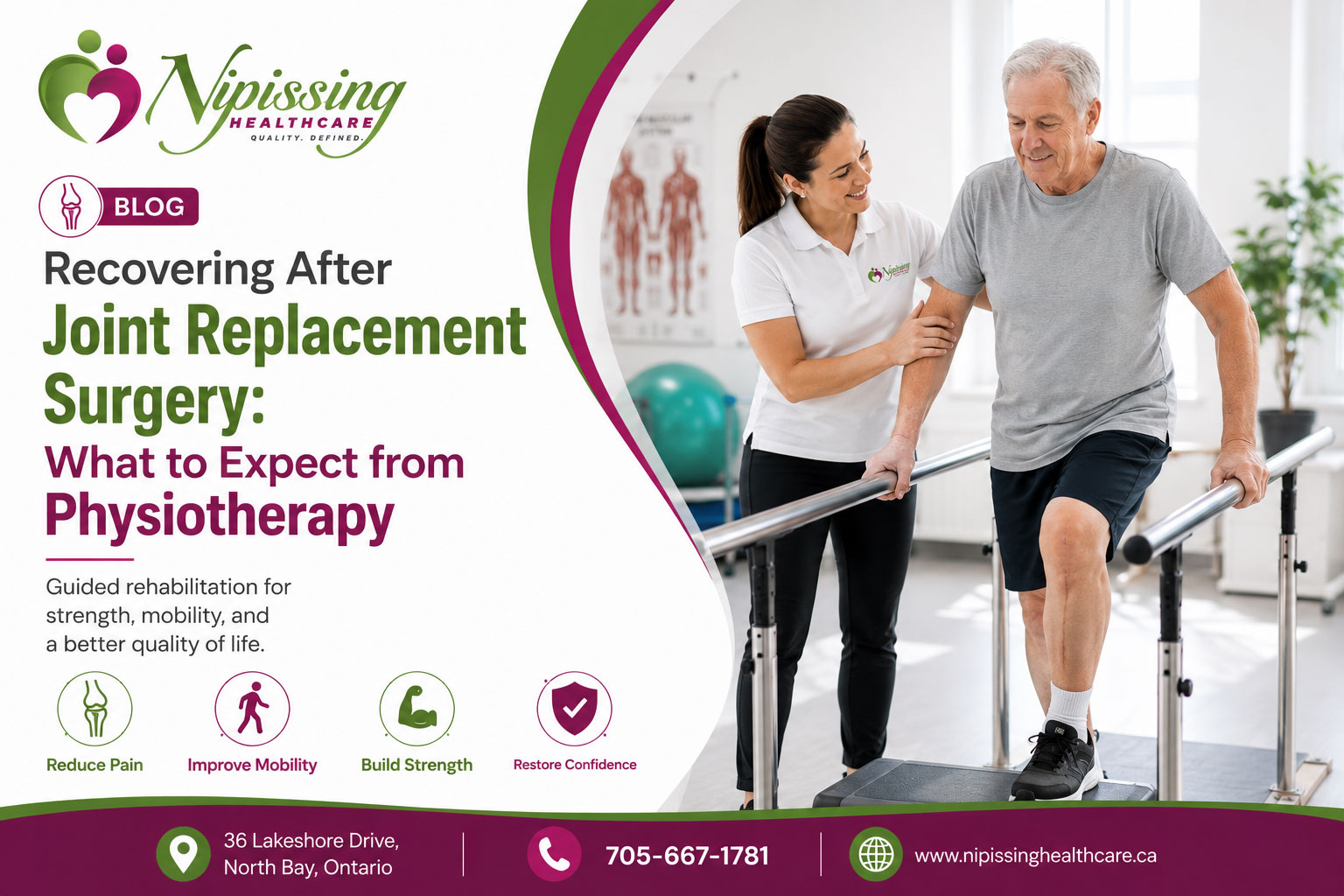
Joint replacement surgery can be life-changing. Whether you’ve undergone a knee replacement, hip replacement, or another joint procedure, surgery is only the beginning of your recovery journey.
Many people expect that once the operation is complete, they’ll quickly return to walking comfortably and enjoying everyday activities. In reality, successful recovery depends not only on the surgery itself but also on a structured rehabilitation program that restores movement, rebuilds strength, and helps you regain confidence.
Without proper rehabilitation, stiffness, muscle weakness, reduced balance, and altered walking patterns can persist long after the surgical wound has healed.
This is where physiotherapy plays a critical role.
At Nipissing Healthcare, our evidence-based rehabilitation programs are designed to support every stage of recovery following joint replacement surgery. Through personalized treatment plans, guided exercises, and progressive rehabilitation, we help patients return safely to the activities that matter most.
Whether your goal is climbing stairs comfortably, returning to gardening, enjoying long walks, or simply moving without pain, physiotherapy helps bridge the gap between surgery and full recovery.
In this guide, we’ll explain what to expect after joint replacement surgery, how physiotherapy supports healing, and practical steps you can take to maximize your recovery.
✍️ Why Physiotherapy Is Essential After Joint Replacement Surgery
Although surgery replaces the damaged joint, it doesn’t automatically restore strength, flexibility, balance, or normal movement.
Following surgery, it’s common to experience:
- Swelling
- Muscle weakness
- Joint stiffness
- Pain during movement
- Reduced balance
- Difficulty walking
- Limited range of motion
Physiotherapy helps address each of these challenges through progressive rehabilitation, allowing patients to recover safely while reducing the risk of long-term complications.
✍️ Recovery Begins with Movement
Many patients worry that movement will damage their new joint.
In reality, guided movement is one of the most important parts of recovery.
Your physiotherapist carefully introduces exercises that encourage healing while protecting the new joint and surrounding tissues.
✍️ Understanding the Stages of Recovery
Recovery following joint replacement is a gradual process.
Each stage focuses on different rehabilitation goals.
Phase 1: Early Recovery (First Few Weeks)
- Managing pain and swelling
- Improving circulation
- Restoring gentle movement
- Learning safe walking techniques
- Beginning simple strengthening exercises
Phase 2: Building Strength
- Improving joint mobility
- Increasing muscle strength
- Enhancing balance
- Walking longer distances
- Returning to everyday activities
Phase 3: Returning to Independence
- Climbing stairs confidently
- Improving endurance
- Returning to hobbies
- Increasing flexibility
- Long-term injury prevention
Every person’s recovery timeline is unique, which is why rehabilitation programs should always be individualized.
Recovery Isn’t a Race
Comparing your recovery with someone else’s can be discouraging.
Factors such as age, general health, previous mobility, and overall fitness all influence healing.
Your physiotherapist monitors your progress and adjusts treatment accordingly to ensure safe, steady improvement.
✍️ Common Challenges During Recovery
Every recovery journey is unique, but many people experience similar challenges after joint replacement surgery. Understanding these challenges can help you stay motivated and recognize when professional guidance is beneficial.
Common post-surgical challenges include:
- Joint stiffness, particularly in the morning
- Swelling after activity
- Muscle weakness around the affected joint
- Difficulty climbing stairs
- Reduced balance and coordination
- Changes in walking patterns
- Fatigue during daily activities
- Fear of putting weight on the new joint
These issues are a normal part of recovery, but they should gradually improve with a structured physiotherapy program.
Rather than pushing through pain or avoiding movement altogether, working closely with your physiotherapist helps ensure you recover safely and effectively.
Recovery Doesn’t End When the Pain Decreases
Many people stop exercising once their pain begins to improve.
However, pain relief doesn’t necessarily mean the muscles, joints, and surrounding tissues have fully recovered.
Continuing rehabilitation helps restore:
- Muscle strength
- Joint flexibility
- Walking mechanics
- Balance
- Endurance
- Functional independence
Completing your rehabilitation program often leads to better long-term outcomes and reduces the likelihood of future mobility issues.
✍️ How Physiotherapy Supports Every Stage of Recovery
Physiotherapy isn’t just a series of exercises—it is a progressive rehabilitation program designed to help you safely return to everyday life.
Following your assessment, your physiotherapist creates a treatment plan based on your surgery, mobility, strength, lifestyle, and personal goals.
Treatment may include:
- Range of motion exercises
- Progressive strengthening
- Balance training
- Walking (gait) retraining
- Functional movement practice
- Stair training
- Pain and swelling management
- Home exercise education
Each stage builds upon the previous one, allowing your body to regain strength while protecting the new joint.
Rehabilitation Is Tailored to You
Someone recovering from a hip replacement has different rehabilitation goals than someone recovering from a knee replacement.
Likewise, an active individual returning to recreational sports requires a different program than someone whose goal is simply walking independently around their home.
At Nipissing Healthcare, every rehabilitation plan is personalized to your recovery goals, helping you progress safely and confidently.
✍️ Exercises That Help Restore Strength and Mobility
Exercise is one of the most important parts of successful recovery.
As healing progresses, your physiotherapist gradually introduces new exercises that improve mobility, strength, endurance, and balance.
Depending on your stage of recovery, exercises may focus on:
- Improving knee or hip flexibility
- Strengthening the quadriceps and hamstrings
- Improving hip stability
- Increasing core strength
- Improving walking mechanics
- Enhancing balance
- Building endurance
Consistency is often more important than intensity.
Performing your prescribed exercises regularly helps your body adapt while minimizing stiffness and improving overall function.
Small Improvements Lead to Big Results
Recovery often happens gradually.
One week you may notice less swelling.
The next, climbing stairs becomes easier.
Later, you may return to driving, gardening, travelling, or enjoying longer walks.
Celebrating these small milestones helps maintain motivation throughout the rehabilitation journey.
✍️ Mistakes That Can Slow Recovery
Although everyone wants to recover as quickly as possible, certain habits may delay progress.
Common mistakes include:
- Skipping prescribed exercises
- Returning to strenuous activities too soon
- Ignoring pain or swelling
- Spending too much time resting
- Comparing your recovery to someone else’s
- Missing follow-up physiotherapy appointments
Recovery requires patience, consistency, and guidance.
Following your physiotherapist’s recommendations helps reduce complications while supporting long-term success.
Listen to Your Body
Experiencing mild discomfort during rehabilitation can be normal.
However, significant pain, increased swelling, or sudden changes in mobility should always be discussed with your physiotherapist or healthcare provider.
Learning to recognize the difference between expected recovery discomfort and warning signs is an important part of rehabilitation.
✍️ Practical Recovery Checklist
✔︎ Complete your prescribed home exercises every day.
✔︎ Walk regularly as recommended by your physiotherapist.
✔︎ Use assistive devices until advised otherwise.
✔︎ Manage swelling with rest, elevation, and appropriate movement.
✔︎ Avoid prolonged sitting whenever possible.
✔︎ Wear supportive footwear.
✔︎ Attend all scheduled physiotherapy appointments.
✔︎ Be patient—steady progress leads to lasting results.
✍️ Supporting Recovery in North Bay
Recovering from joint replacement surgery takes time, commitment, and the right support.
At Nipissing Healthcare, our experienced physiotherapists provide evidence-based rehabilitation programs that help patients regain strength, restore mobility, improve balance, and return to everyday activities with confidence.
Whether you’ve recently undergone hip or knee replacement surgery or are preparing for an upcoming procedure, we’re here to support every stage of your recovery journey.
Serving North Bay and surrounding communities, our goal is to help every patient achieve safe, lasting recovery and improved quality of life.
✍️ Frequently Asked Questions
💞 How soon should I start physiotherapy after joint replacement surgery?
Most patients begin physiotherapy shortly after surgery, often within the first few days, depending on their surgeon’s recommendations.
💞 How long does recovery usually take?
Recovery varies between individuals. Many people continue improving for several months following surgery, with physiotherapy supporting each stage of healing.
💞 Will physiotherapy be painful?
Some discomfort during rehabilitation is normal, but exercises should remain safe and manageable. Your physiotherapist adjusts treatment based on your comfort and progress.
💞 Can physiotherapy improve my walking?
Yes. Physiotherapy focuses on restoring normal walking patterns, improving strength, enhancing balance, and increasing confidence during movement.
💞 What happens if I stop physiotherapy early?
Ending rehabilitation too soon may result in persistent weakness, reduced flexibility, poor movement patterns, and slower overall recovery.
✍️ Conclusion
Joint replacement surgery is an important step toward reducing pain and improving quality of life—but successful recovery depends on what happens afterward.
Through evidence-based physiotherapy, patients can rebuild strength, restore mobility, improve balance, and return to everyday activities with confidence.
By staying committed to your rehabilitation program and working closely with your physiotherapist, you give yourself the best opportunity for a safe, successful, and lasting recovery.
✍️ Book Your Post-Surgical Physiotherapy Assessment
If you’re recovering from hip replacement, knee replacement, or another joint surgery, our experienced physiotherapy team is here to support you every step of the way.
At Nipissing Healthcare, we provide personalized rehabilitation programs designed to help you recover safely, regain independence, and return to the activities you enjoy.
Book your physiotherapy assessment today and take the next step toward a stronger recovery.
📍 36 Lakeshore Drive, North Bay, Ontario
👉 Post-Surgical Rehabilitation
👉 Musculoskeletal Rehabilitation