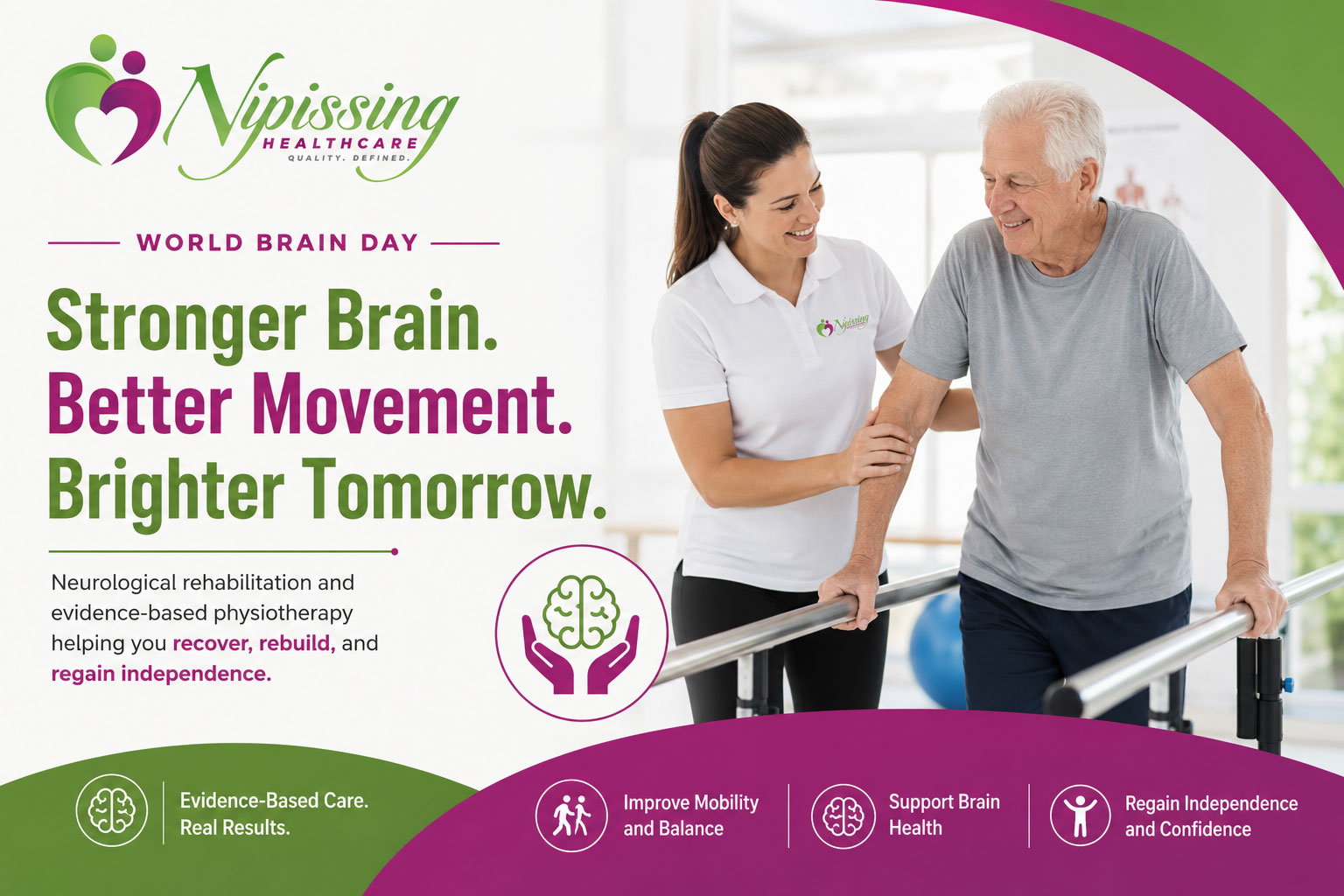
Every movement we make begins in the brain. Whether it’s taking a step, reaching for a cup of coffee, maintaining balance while walking, or simply getting out of bed, the brain continuously communicates with the rest of the body through an incredibly complex network of nerves.
When neurological conditions such as stroke, Parkinson’s disease, multiple sclerosis, or traumatic brain injuries interrupt these signals, even the simplest everyday activities can become challenging. Tasks that were once automatic may require significant effort, patience, and rehabilitation.
Observed each year on July 22, World Brain Day highlights the importance of brain health while raising awareness about neurological disorders that affect millions of people worldwide. It also serves as an opportunity to recognize the role rehabilitation plays in helping individuals regain function, confidence, and independence.
While every neurological condition is different, one message remains consistent: recovery does not end after diagnosis or hospital discharge. Rehabilitation is often one of the most important steps in helping individuals improve movement, adapt to physical changes, and return to meaningful daily activities.
At Nipissing Healthcare, our evidence-based physiotherapy and neurological rehabilitation programs are designed to help individuals rebuild strength, improve mobility, enhance balance, and maximize functional independence through personalized care.
✍️ Understanding World Brain Day
World Brain Day is an international healthcare awareness initiative dedicated to promoting brain health and increasing public understanding of neurological conditions.
Beyond raising awareness, the day encourages conversations about prevention, early diagnosis, rehabilitation, and ongoing support for people living with neurological disorders.
Neurological conditions can affect individuals of every age. Some develop gradually over time, while others occur suddenly following events such as a stroke or traumatic brain injury. Although the causes differ, many neurological conditions have one thing in common—they can significantly impact movement, coordination, balance, strength, communication, and everyday independence.
For many individuals and families, rehabilitation becomes an essential part of the recovery journey.
✍️ How the Brain Controls Movement
The brain acts as the body’s control centre.
Every movement begins when the brain sends electrical signals through the nervous system to activate muscles throughout the body. These signals coordinate posture, balance, walking, hand movements, facial expressions, and countless other physical functions.
When neurological damage occurs, these communication pathways may become disrupted.
Depending on the condition, individuals may experience:
Muscle Weakness
Reduced strength can make standing, walking, lifting objects, or climbing stairs more difficult.
Impaired Balance
Changes in balance increase the likelihood of falls while affecting confidence during everyday movement.
Reduced Coordination
Simple activities requiring precise movement may become slower or more difficult to perform.
Changes in Walking Pattern
Neurological conditions often affect posture, stride length, speed, and overall mobility.
Fatigue
Many neurological disorders require the brain to work harder to complete routine tasks, leading to increased physical and mental fatigue.
Recognizing these challenges early allows rehabilitation to begin before mobility declines further.
✍️ Neurological Conditions That Benefit from Rehabilitation
Neurological rehabilitation is appropriate for a wide range of conditions affecting the brain, spinal cord, and nervous system.
Every rehabilitation program is individualized according to the person’s diagnosis, functional ability, personal goals, and stage of recovery.
Some of the most common conditions include:
Stroke
Stroke occurs when blood flow to part of the brain is interrupted, resulting in damage to brain tissue.
Depending on the area affected, individuals may experience:
- Weakness on one side of the body
- Difficulty walking
- Reduced balance
- Muscle stiffness
- Reduced coordination
- Difficulty performing everyday activities
Physiotherapy focuses on restoring movement, improving walking ability, rebuilding strength, and helping individuals regain independence throughout recovery.
Parkinson’s Disease
Parkinson’s disease is a progressive neurological condition that affects movement.
Common symptoms include:
- Tremors
- Slower movement
- Muscle rigidity
- Balance difficulties
- Changes in posture
- Walking challenges
Evidence-based physiotherapy helps individuals improve mobility, maintain physical function, reduce fall risk, and continue participating in everyday activities for as long as possible.
Multiple Sclerosis (MS)
Multiple sclerosis affects communication between the brain and the rest of the body.
Symptoms vary significantly but may include:
- Muscle weakness
- Fatigue
- Reduced balance
- Walking difficulties
- Coordination challenges
Physiotherapy programs are tailored to help individuals improve endurance, maintain strength, and maximize mobility throughout different stages of the condition.
Acquired Brain Injury
Brain injuries resulting from trauma, surgery, or illness may affect movement, coordination, balance, and overall physical function.
Neurological rehabilitation supports recovery by helping individuals rebuild functional movement patterns while adapting to ongoing physical changes.
✍️ What Is Neurological Rehabilitation?
Neurological rehabilitation is a specialized area of physiotherapy focused on helping individuals improve movement, function, and independence following conditions that affect the brain or nervous system.
Unlike general rehabilitation, neurological rehabilitation considers how the brain communicates with the body and how movement can be retrained through structured, repetitive, and goal-oriented therapy.
Every person’s recovery journey is different. Some individuals aim to return to work, while others focus on walking safely, climbing stairs, improving balance, or simply becoming more independent at home.
At Nipissing Healthcare, rehabilitation programs are designed around each individual’s unique goals, ensuring treatment remains practical, meaningful, and focused on everyday function.
Recovery Is Different for Everyone
o two neurological conditions affect people in exactly the same way.
Even individuals with the same diagnosis may experience different symptoms, recovery timelines, and rehabilitation goals.
For this reason, treatment plans are never one-size-fits-all. Rehabilitation begins with a comprehensive assessment of how a person moves, identifies functional limitations, and develops realistic goals based on their lifestyle and priorities.
Progress is measured through meaningful improvements in mobility, strength, confidence, and participation in everyday activities.
✍️ How Physiotherapy Supports Neurological Recovery
Physiotherapy plays an important role in helping the nervous system adapt following injury or neurological disease.
While rehabilitation cannot reverse every neurological condition, it can help individuals maximize their physical potential, improve movement efficiency, and develop strategies that support greater independence.
Treatment often focuses on restoring functional movement rather than simply strengthening muscles.
Common rehabilitation goals include:
- Improving walking ability
- Increasing balance and stability
- Enhancing coordination
- Building muscle strength
- Reducing stiffness
- Improving posture
- Supporting safe transfers and mobility
- Increasing endurance for daily activities
Through consistent rehabilitation, many individuals experience meaningful improvements that enhance both mobility and overall quality of life.
Gait Training
Walking is one of the most common rehabilitation goals following neurological injury.
A physiotherapist evaluates walking mechanics, posture, stride length, foot placement, and overall movement patterns to identify areas that can be improved.
Treatment may include:
- Walking practice
- Step training
- Obstacle navigation
- Turning safely
- Stair training
- Outdoor mobility
Improving walking efficiency often reduces fatigue while increasing confidence during everyday activities.
Balance Rehabilitation
Many neurological conditions affect the body’s ability to maintain balance during movement.
Balance rehabilitation helps individuals safely challenge their stability through carefully progressed exercises that improve coordination, body awareness, and postural control.
Improved balance contributes to:
- Reduced fall risk
- Greater confidence
- Safer mobility
- Better functional independence
Functional Movement Training
Successful rehabilitation focuses on movements that matter in everyday life.
Instead of performing exercises without context, physiotherapy incorporates practical tasks such as:
- Standing from a chair
- Reaching overhead
- Carrying household items
- Climbing stairs
- Walking outdoors
- Getting into and out of a vehicle
racticing meaningful movements helps individuals transfer rehabilitation gains into real-world situations.
✍️ The Importance of Early Rehabilitation
Early intervention is one of the most important factors influencing recovery following many neurological conditions.
Beginning rehabilitation soon after medical stabilization can help reduce complications associated with prolonged inactivity while encouraging earlier improvements in mobility and physical function.
Early physiotherapy may help:
- Prevent muscle weakness
- Improve circulation
- Reduce stiffness
- Maintain joint mobility
- Improve walking ability
- Encourage safe movement patterns
- Build confidence during recovery
Recovery often occurs gradually. Consistent rehabilitation allows individuals to build on progress over time while adapting treatment as their abilities improve.
✍️ Evidence-Based Rehabilitation Makes a Difference
Modern neurological rehabilitation is guided by evidence-based practice.
This means treatment decisions are informed by current clinical research, professional expertise, and the individual’s own rehabilitation goals.
Evidence-based physiotherapy emphasizes:
Goal-Oriented Treatment
Each rehabilitation program is developed around activities that are meaningful to the individual, helping therapy remain motivating and functional.
Progressive Exercise
Exercises are gradually adjusted as strength, mobility, and coordination improve to continue challenging the nervous system safely.
Patient Education
Understanding a neurological condition empowers individuals and caregivers to actively participate in rehabilitation and make informed decisions about ongoing care.
Long-Term Functional Outcomes
The focus extends beyond symptom management to improving participation in work, family life, recreation, and community activities.
✍️ Supporting Families and Caregivers
Neurological conditions affect more than the individual—they also impact families, caregivers, and support networks.
Education plays an important role throughout rehabilitation.
Physiotherapists can provide guidance on:
- Safe mobility techniques
- Fall prevention strategies
- Home exercise programs
- Positioning and transfers
- Activity modification
- Energy conservation
Supporting caregivers helps create a safer and more confident recovery environment while encouraging continued progress outside the clinic.
✍️ Recovery Is About Progress, Not Perfection
Neurological rehabilitation is rarely a straight line.
Some days bring noticeable improvements, while others may feel more challenging. Consistency, patience, and ongoing support remain essential throughout the rehabilitation journey.
Every improvement—whether standing independently, walking a little farther, improving balance, or completing a daily activity with greater ease—represents meaningful progress.
At Nipissing Healthcare, rehabilitation is centred on helping individuals achieve realistic, functional goals that improve independence and quality of life through compassionate, evidence-based care.
✍️ Frequently Asked Questions
🧹️ Can physiotherapy help after a stroke?
Yes. Physiotherapy is an important part of stroke rehabilitation and focuses on improving mobility, balance, strength, coordination, and functional independence. Treatment plans are tailored to each individual’s recovery goals.
🧹️ What conditions are treated through neurological rehabilitation?
Neurological rehabilitation may benefit individuals living with conditions such as stroke, Parkinson’s disease, multiple sclerosis, traumatic brain injury, vestibular disorders, spinal cord injuries, and other neurological conditions affecting movement and function.
🧹️ When should neurological rehabilitation begin?
In many cases, rehabilitation should begin as soon as it is medically appropriate. Early intervention often helps maintain mobility, reduce complications, and encourage functional recovery.
🧹️ Is neurological rehabilitation only for older adults?
No. Neurological conditions can affect people of all ages. Rehabilitation programs are designed according to the individual’s diagnosis, current abilities, and personal goals rather than age.
🧹️ Do I need a referral to see a physiotherapist?
Depending on your healthcare coverage and circumstances, a referral may not always be required. Contact Nipissing Healthcare to discuss your specific situation and available appointment options.
✍️ Conclusion
World Brain Day is a reminder that brain health influences nearly every aspect of our daily lives—from how we move and communicate to how we maintain independence and participate in the activities we enjoy.
For individuals living with neurological conditions, recovery is often a journey rather than a destination. While every experience is unique, rehabilitation provides opportunities to improve mobility, restore confidence, and regain meaningful function over time.
With evidence-based physiotherapy, personalized treatment plans, and compassionate support, neurological rehabilitation can help individuals continue moving forward—one step at a time.
Whether recovery follows a stroke, Parkinson’s disease, multiple sclerosis, or another neurological condition, the right rehabilitation program can make a meaningful difference in everyday life.
Start Your Rehabilitation Journey with Nipissing Healthcare
If you or someone you care about is living with a neurological condition, our experienced physiotherapy team is here to help.
At Nipissing Healthcare, we provide evidence-based neurological rehabilitation designed to improve movement, enhance balance, restore confidence, and support greater independence.
Contact our team today to schedule an assessment and begin your personalized rehabilitation journey.