
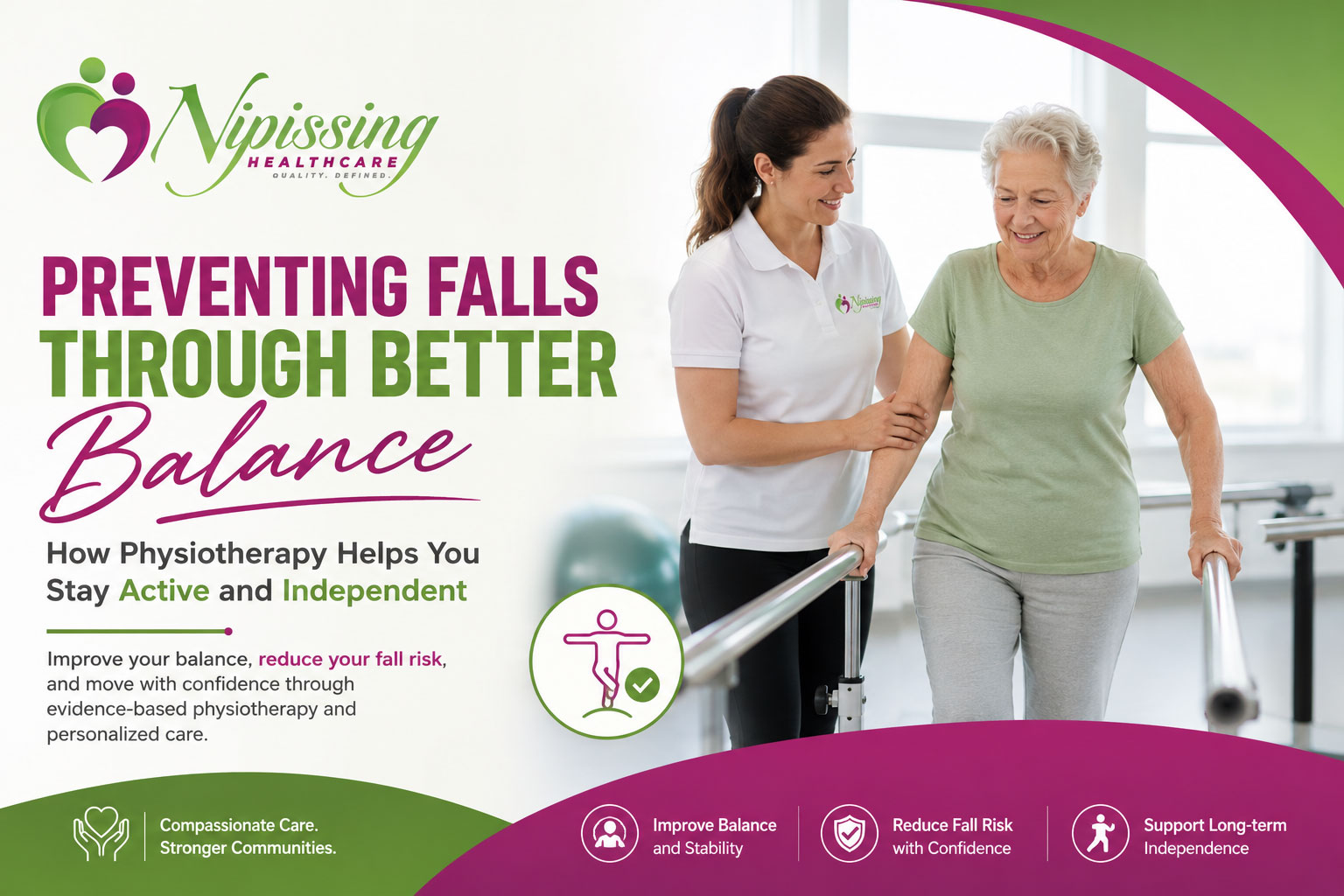
A fall can happen in just a few seconds, but its effects can last much longer. For many individuals, especially older adults and those living with neurological or musculoskeletal conditions, a fall can lead to injury, reduced confidence, and limitations in everyday activities.
The encouraging news is that many falls are preventable. By improving balance, strength, coordination, and mobility, physiotherapy helps reduce fall risk while supporting safe, confident movement.
At Nipissing Healthcare, we believe prevention is just as important as recovery. Through evidence-based physiotherapy and rehabilitation, our team works with individuals to identify movement challenges, improve physical function, and develop personalized treatment plans that promote long-term independence.
Whether you’re recovering from an injury, managing a neurological condition, or simply looking to improve your stability, taking proactive steps today can help you continue enjoying the activities that matter most.
♦️ Why Falls Are More Common Than Many People Realize
Falls are one of the leading causes of injury among older adults, but they are not limited to aging. Reduced strength, impaired balance, neurological conditions, joint pain, previous injuries, and even certain medications can all increase the likelihood of falling.
A single fall may result in fractures, soft tissue injuries, or a loss of confidence that discourages people from staying active. Over time, reduced activity can contribute to muscle weakness, poorer balance, and an even greater risk of future falls.
Recognizing these risk factors early allows individuals to take proactive steps toward maintaining mobility and independence.
♦️ Understanding Balance and Why It Matters
Balance is the body’s ability to maintain stability while standing, walking, changing direction, or performing everyday movements. It depends on several systems working together, including the muscles, joints, vision, inner ear (vestibular system), and nervous system.
When one or more of these systems is affected, simple activities such as climbing stairs, walking on uneven ground, or getting up from a chair can become more challenging.
Good balance supports much more than walking safely—it allows people to continue participating in work, recreation, exercise, and daily routines with greater confidence.
♦️ Common Factors That Increase the Risk of Falls
Every individual has different risk factors, but some of the most common include:
➥ Muscle Weakness
Reduced muscle strength affects stability, posture, and the ability to react quickly when balance is challenged.
➥ Poor Mobility
Joint stiffness, reduced flexibility, and pain can limit movement, making everyday tasks more difficult.
➥ Neurological Conditions
Conditions such as Parkinson’s disease, stroke, multiple sclerosis, and other neurological disorders may affect coordination, balance, and walking patterns.
➥ Previous Falls
Individuals who have fallen before are often at greater risk of experiencing another fall due to reduced confidence and changes in movement patterns.
➥ Environmental Hazards
Loose rugs, poor lighting, uneven surfaces, and cluttered walkways can all contribute to falls at home or in the community.
♦️ How Physiotherapy Helps Improve Balance
Balance is not simply about standing still—it is about how the body responds to movement in everyday situations. Walking across different surfaces, climbing stairs, reaching for an object, or changing direction all require coordination between the muscles, joints, and nervous system.
A physiotherapist begins by identifying the underlying factors affecting balance rather than simply addressing the symptoms. This comprehensive assessment allows treatment to be tailored to each individual’s specific needs and goals.
At Nipissing Healthcare, physiotherapy programs are designed to improve functional movement through evidence-based rehabilitation techniques that help individuals move with greater confidence and stability.
Comprehensive Balance Assessment
Every rehabilitation journey begins with understanding how a person moves.
A physiotherapist may assess:
- Walking pattern (gait)
- Standing balance
- Lower limb strength
- Joint mobility
- Functional movements
- Coordination
- Risk of falling
- Previous injuries or neurological conditions
This assessment forms the foundation for a personalized rehabilitation plan.
♦️ Improving Strength for Better Stability
Muscle strength plays a vital role in maintaining balance
Weakness in the hips, knees, ankles, or core muscles can make everyday activities more difficult and increase the likelihood of falls.
Targeted strengthening exercises help improve:
- Stability
- Walking ability
- Stair climbing
- Sit-to-stand movements
- Overall functional mobility
As strength improves, individuals often experience greater confidence in performing daily activities.
Functional Movement Training
Rather than focusing only on isolated exercises, physiotherapy emphasizes movements that people perform every day.
These may include:
- Standing from a chair
- Walking safely
- Turning while walking
- Reaching overhead
- Carrying groceries
- Climbing stairs
- Navigating uneven ground
Practicing these movements in a controlled environment helps prepare individuals for real-life situations while reducing their risk of falls.
➥ Balance Retraining
Balance can often be improved through structured rehabilitation.
Exercises may challenge different balance systems by incorporating:
- Single-leg standing
- Weight shifting
- Dynamic walking activities
- Directional changes
- Obstacle negotiation
- Coordination exercises
These activities are progressed gradually based on each individual’s ability and rehabilitation goals.
♦️ Evidence-Based Fall Prevention Strategies
Preventing falls involves much more than exercise alone.
Evidence-based physiotherapy combines movement training, education, and lifestyle recommendations to reduce fall risk while promoting long-term independence.
Some of the most effective strategies include:
➥ Regular Physical Activity
Maintaining an active lifestyle helps preserve muscle strength, flexibility, and cardiovascular health.
Even gentle movement performed consistently can contribute to improved balance and mobility.
➥ Improving Walking Confidence
Fear of falling often causes individuals to limit their physical activity.
Unfortunately, reduced activity can contribute to muscle weakness and further decline in balance.
Physiotherapy helps individuals rebuild confidence through progressive rehabilitation and supervised movement training
➥ Safe Home Environments
Simple adjustments around the home can significantly reduce fall risk.
Examples include:
- Removing loose rugs
- Improving lighting
- Keeping walkways clear
- Installing handrails where needed
- Wearing supportive footwear indoors and outdoors
Combining environmental modifications with physiotherapy provides a comprehensive approach to fall prevention.
➥ Education and Long-Term Prevention
Successful rehabilitation continues beyond the clinic.
Patients receive education about:
- Safe movement techniques
- Home exercise programs
- Activity modification
- Energy conservation
- Injury prevention strategies
This empowers individuals to continue making progress between appointments and maintain long-term improvements.
♦️ Conditions That Can Affect Balance
Many medical conditions influence how the body moves and maintains stability.
Physiotherapy can support individuals living with:
- Parkinson’s disease
- Stroke
- Multiple sclerosis
- Vestibular disorders
- Arthritis
- Chronic pain
- Joint replacements
- Sports injuries
- Musculoskeletal conditions
- Peripheral neuropathy
Because every individual experiences these conditions differently, rehabilitation programs are always tailored to personal goals, functional ability, and overall health.
♦️ Building Confidence Through Rehabilitation
One of the greatest impacts of a fall is often psychological rather than physical.
After falling, many individuals become hesitant to walk outdoors, participate in exercise, or engage in activities they once enjoyed. This reduction in confidence can lead to decreased activity levels, which may further affect strength, mobility, and balance.
Physiotherapy addresses both the physical and functional aspects of recovery. By gradually improving movement, strength, and stability, individuals often regain the confidence to return to everyday activities safely and independently.
At Nipissing Healthcare, rehabilitation is centred on helping people move with greater confidence while supporting long-term health, mobility, and quality of life.
♦️ Practical Tips to Reduce Your Risk of Falls
While every individual’s rehabilitation journey is different, small lifestyle changes can make a meaningful difference in improving balance and reducing the likelihood of falls.
➥ Fall Prevention Checklist
✔︎ Stay physically active with exercises appropriate for your ability.
✔︎ Strengthen your legs and core through a structured exercise program.
✔︎ Wear supportive, well-fitting footwear with good grip.
✔︎ Remove loose rugs, clutter, and other tripping hazards around your home.
✔︎ Ensure stairways, hallways, and entrances are well lit.
✔︎ Use handrails when climbing stairs or navigating uneven surfaces.
✔︎ Have your balance and mobility assessed if you notice unsteadiness, dizziness, or frequent near-falls.
✔︎ Follow your physiotherapist’s prescribed home exercise program to maintain progress between appointments.
Making these habits part of your daily routine can support better movement, greater confidence, and long-term independence.
♦️ Supporting Healthy Movement in North Bay
Remaining active and independent allows people to continue enjoying work, hobbies, social activities, and time with family. Access to professional rehabilitation services within the local community plays an important role in supporting these goals.
At Nipissing Healthcare, we are committed to providing evidence-based physiotherapy and rehabilitation services for residents across North Bay and the surrounding communities. Whether you’re recovering from an injury, managing a neurological condition, or looking to improve balance and mobility, our team develops personalized rehabilitation programs designed around your individual needs.
By combining clinical expertise with patient-centred care, we help individuals improve movement, restore function, and return to the activities that matter most.
♦️ Frequently Asked Questions
➥ Can physiotherapy help prevent falls?
Yes. Physiotherapy focuses on improving balance, strength, coordination, flexibility, and walking ability. Through individualized assessment and rehabilitation, many people can reduce their risk of falls while improving confidence in everyday movement.
➥ Who should consider balance rehabilitation?
Balance rehabilitation may benefit older adults, individuals recovering from surgery or injury, people living with neurological conditions such as Parkinson’s disease or stroke, and anyone who experiences dizziness, instability, or repeated falls.
➥ How often should balance exercises be performed?
The frequency depends on your individual assessment and rehabilitation goals. Your physiotherapist will recommend an exercise program that is appropriate for your condition, ability, and stage of recovery.
➥ Is balance training only for older adults?
No. Balance training is valuable for people of all ages. Athletes, individuals recovering from injuries, people with neurological conditions, and anyone looking to improve movement and stability can benefit from targeted rehabilitation.
➥ When should I see a physiotherapist about balance concerns?
If you notice increasing unsteadiness, difficulty walking, dizziness, reduced confidence while moving, or have experienced a fall or near-fall, seeking an early assessment may help identify contributing factors and support timely intervention.
♦️ Conclusion
Good balance is essential for maintaining independence, confidence, and quality of life. Although falls are common, they are not an inevitable part of aging or living with a chronic condition. Through early assessment, personalized rehabilitation, and evidence-based physiotherapy, many individuals can improve stability, reduce their risk of falls, and continue participating in the activities they enjoy.
Improving balance is not simply about preventing injury—it is about maintaining the freedom to move safely, remain active, and live independently.
♦️ Book Your Physiotherapy Assessment
If you’re experiencing balance concerns, recovering from an injury, or looking to improve your mobility, our team is here to help.
At Nipissing Healthcare, we provide personalized physiotherapy and rehabilitation programs designed to support safer movement, restore function, and promote long-term independence.
Book your physiotherapy assessment today and take the first step toward moving with greater confidence.
📍 36 Lakeshore Drive, North Bay, ON
📀 Sports Injury Rehabilitation
📀 Musculoskeletal Rehabilitation
📀 About Us
📀 Home