
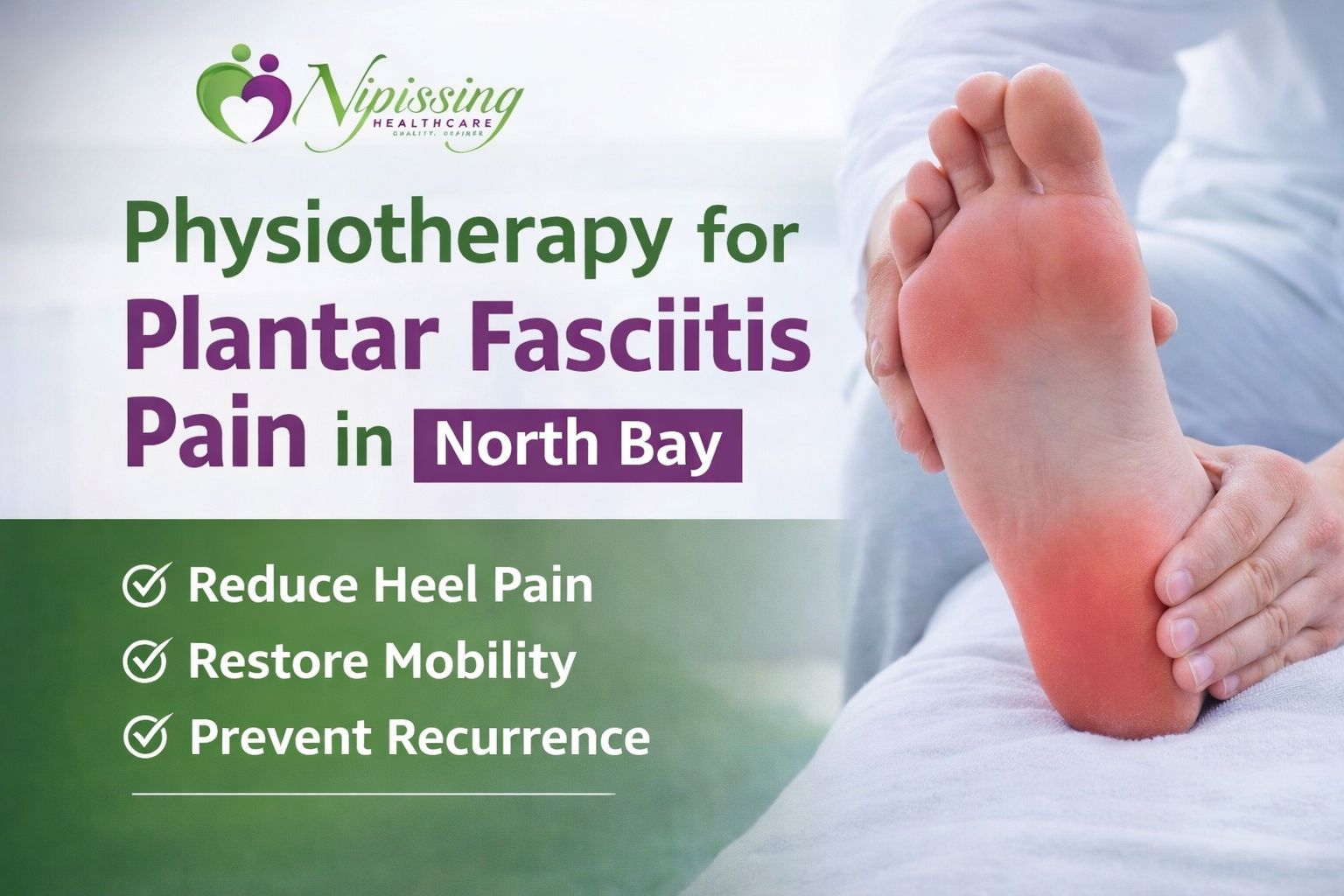
Persistent heel pain can make walking, standing, or even getting out of bed uncomfortable. One of the most common causes is plantar fasciitis. Plantar fasciitis physiotherapy in North Bay focuses on treating the root cause of pain, improving foot mechanics, and restoring long-term mobility.
At Nipissing Healthcare, clinic-based physiotherapy provides structured, evidence-based care tailored to your condition and lifestyle.
What Causes Plantar Fasciitis Pain?
Plantar fasciitis occurs when the plantar fascia—a thick band of tissue supporting the arch of the foot—becomes irritated due to repetitive strain.
Common causes include:
- Poor foot biomechanics
- Tight calf muscles or Achilles tendon
- Prolonged standing or walking
- Inadequate footwear
- Sudden increase in activity
Ignoring early symptoms often leads to chronic pain and mobility limitations.
Why Heel Pain Is Worse in the Morning
Overnight tightening of the plantar fascia causes sharp pain with the first few steps in the morning, a hallmark symptom of plantar fasciitis.
Who Is Most at Risk?
Seniors, healthcare workers, retail staff, runners, and individuals with flat feet or limited ankle mobility are at higher risk.
How Physiotherapy Helps Plantar Fasciitis Pain
Physiotherapy treats plantar fasciitis by addressing both pain and the underlying mechanical issues.
Treatment typically includes:
- Clinical assessment of foot mechanics and gait
- Manual therapy to reduce tissue stiffness
- Targeted stretching and strengthening
- Balance and load-management training
This approach promotes healing while preventing recurrence.
What Is the Plantar Fasciitis Recovery Timeline?
Recovery depends on severity and how early treatment begins.
Typical timelines:
- Mild cases: 4–6 weeks
- Moderate cases: 6–10 weeks
- Chronic cases: up to 3–6 months
Consistent physiotherapy significantly shortens recovery time compared to rest alone.
Exercises for Plantar Fasciitis Recommended by Physiotherapists
Physiotherapy-guided exercises may include:
- Calf and plantar fascia stretches
- Foot arch strengthening
- Ankle mobility exercises
- Balance and walking retraining
Exercises are progressed gradually to avoid flare-ups and support long-term healing.
Clinic-Based Physiotherapy vs Self-Treatment
While online exercises or rest may provide temporary relief, clinic-based physiotherapy offers:
- One-on-one assessment
- Hands-on treatment
- Personalized progression
- Ongoing monitoring
This results in safer, faster, and more complete recovery.
FAQs – Plantar Fasciitis Physiotherapy in North Bay
- How does physiotherapy help plantar fasciitis pain?
By reducing inflammation, improving foot mechanics, and strengthening supporting muscles.
- How long does plantar fasciitis take to heal with physiotherapy?
Most patients improve within 4–10 weeks depending on severity.
- Can plantar fasciitis heal without physiotherapy?
Some mild cases may improve, but untreated causes often lead to recurrence.
- Is physiotherapy painful for plantar fasciitis?
Treatment is gentle and adjusted to your comfort level.
- When should I see a physiotherapist for heel pain?
If pain lasts more than 7–10 days or affects walking.
Conclusion – Book Physiotherapy for Plantar Fasciitis in North Bay
Plantar fasciitis does not need to become a long-term problem. Plantar fasciitis physiotherapy in North Bay helps reduce heel pain, restore mobility, and prevent future flare-ups through clinic-led, evidence-based care.
Book your physiotherapy assessment at Nipissing Healthcare today.
📞 705-667-1781
📍 North Bay, Ontario