Most people don’t think about seeing a physiotherapist until pain begins interfering with everyday life. By then, simple movements like walking, climbing stairs, reaching overhead, or getting out of bed may already feel difficult.
The reality is that pain is often the body’s final warning—not the first. Long before pain becomes severe, your body may already be showing signs that something isn’t functioning as it should. Ignoring these early symptoms can allow minor issues to develop into more significant injuries that require longer rehabilitation.
Physiotherapy is not only about treating pain. It is about identifying the underlying cause of movement problems, restoring function, improving strength, and helping you return to the activities you enjoy with greater confidence.
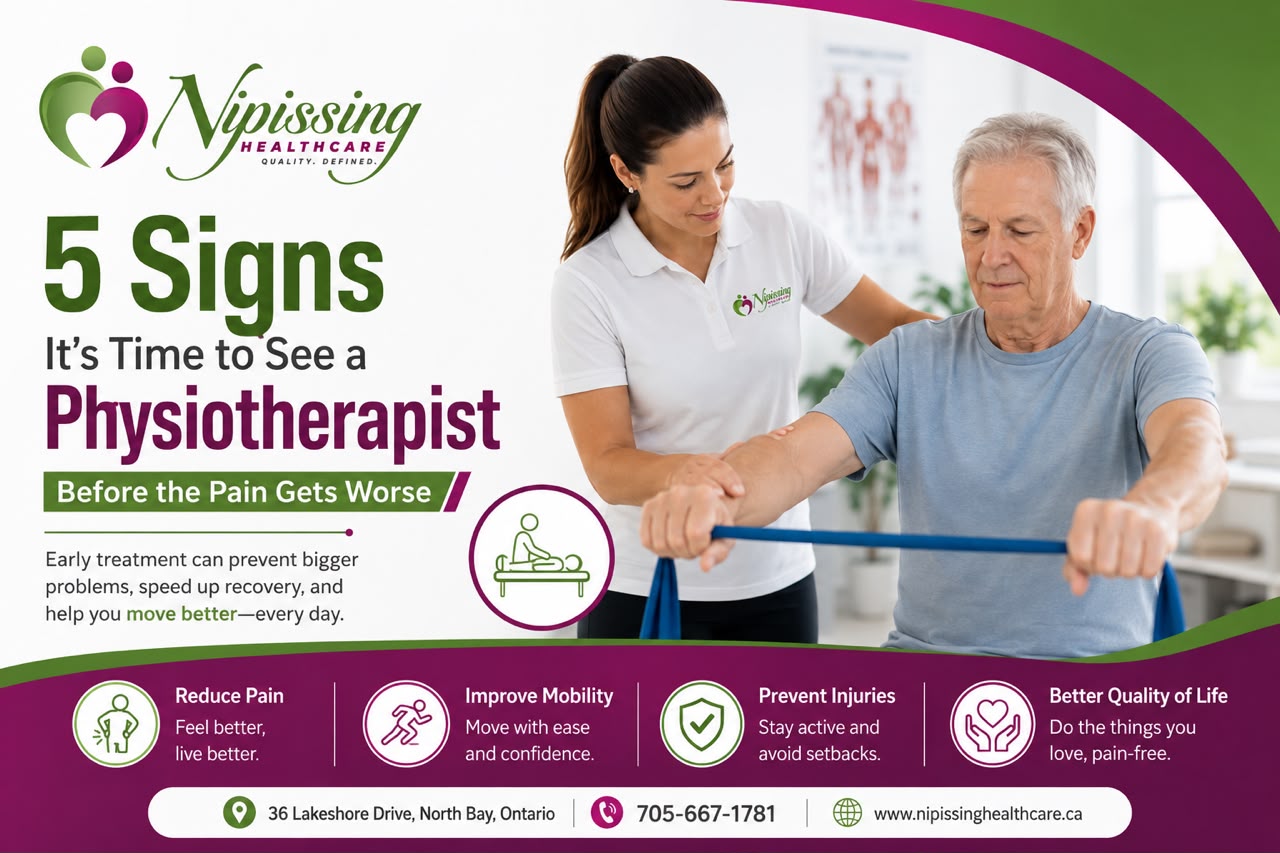
At Nipissing Healthcare, our evidence-based physiotherapy programs focus on personalized assessment and rehabilitation. Whether you’re recovering from an injury, experiencing persistent discomfort, or simply noticing changes in the way your body moves, early intervention can often make recovery faster and more effective.
Here are five common signs that it may be time to schedule a physiotherapy assessment.
1. Pain That Doesn’t Improve After a Few Days
Everyone experiences occasional muscle soreness after physical activity or a busy day. In many cases, this discomfort improves with rest and gentle movement.
However, pain that lasts for several days—or continues returning—should not be ignored.
Persistent discomfort may indicate:
- Muscle strain
- Tendon irritation
- Ligament injury
- Joint dysfunction
- Nerve involvement
- Poor movement mechanics
Rather than masking symptoms with pain medication, physiotherapy aims to identify why the pain is occurring and address its root cause.
Early treatment often helps reduce recovery time while preventing the condition from becoming chronic.
Pain Isn’t Always the Problem
Many conditions develop gradually.
The discomfort you feel may actually be the result of weeks or months of altered movement patterns, muscle weakness, or joint stiffness.
Physiotherapy addresses these contributing factors rather than focusing solely on symptom relief.
2. Your Movement Feels Restricted
Have you noticed that everyday movements don’t feel as easy as they once did?
Perhaps you find it difficult to:
- Bend comfortably
- Reach overhead
- Turn your neck
- Walk long distances
- Climb stairs
- Kneel or squat
Reduced mobility often develops gradually, making it easy to overlook.
Limited movement may result from:
- Joint stiffness
- Muscle tightness
- Previous injuries
- Arthritis
- Poor posture
- Post-surgical recovery
Improving mobility is one of the primary goals of physiotherapy.
Following a comprehensive assessment, your physiotherapist develops a personalized treatment plan designed to restore healthy movement while reducing strain on surrounding muscles and joints.
Better Movement Supports Better Living
Healthy movement allows you to perform everyday activities more comfortably.
Simple improvements in flexibility, strength, and joint mobility can make tasks such as gardening, driving, exercising, lifting groceries, or playing with grandchildren feel significantly easier.
3. You’re Recovering from an Injury or Surgery
Many people assume recovery is complete once pain decreases following an injury or surgical procedure.
In reality, healing and rehabilitation are not always the same thing.
Although tissues may begin healing naturally, muscles often remain weak, balance may be reduced, and movement patterns may still be altered.
Without proper rehabilitation, individuals may experience:
- Reduced strength
- Limited flexibility
- Ongoing stiffness
- Poor balance
- Re-injury
Physiotherapy bridges the gap between healing and full recovery by helping restore normal movement, rebuild strength, and safely prepare the body for daily activities.
Rehabilitation Is a Progressive Process
Recovery should progress gradually.
Your physiotherapist continually adjusts your rehabilitation program based on your progress, ensuring exercises remain safe, effective, and aligned with your recovery goals.
This personalized approach supports better long-term outcomes than simply waiting for pain to disappear.
4. You’re Experiencing Balance or Walking Difficulties
Balance problems are not a normal part of aging.
Whether you feel unsteady while walking, experience frequent near-falls, or lack confidence on uneven surfaces, these changes deserve professional assessment.
Balance may be affected by:
- Muscle weakness
- Vestibular disorders
- Neurological conditions
- Previous injuries
- Joint problems
- Reduced physical activity
Physiotherapy includes balance assessments that help identify contributing factors while developing targeted rehabilitation strategies to improve stability and reduce fall risk.
Confidence Matters
Fear of falling often causes individuals to reduce their activity levels.
Unfortunately, becoming less active can further reduce strength, balance, and overall mobility.
Physiotherapy helps rebuild both physical ability and confidence, encouraging individuals to remain active and independent.
5. Pain Is Preventing You from Enjoying Everyday Life
Pain doesn’t have to be severe to affect your quality of life.
Many people gradually stop doing the activities they enjoy because discomfort has become part of their routine.
Perhaps you’ve stopped:
- Walking regularly
- Playing sports
- Exercising
- Gardening
- Traveling
- Carrying grandchildren
- Participating in hobbies
These lifestyle changes often happen slowly, making them easy to accept as “normal.”
The goal of physiotherapy is not simply to reduce pain—it is to help you return to the activities that bring meaning, enjoyment, and independence to your life.
What Happens During Your First Physiotherapy Assessment?
Many people feel uncertain about what to expect during their first physiotherapy appointment. A thorough assessment is an important first step because it helps identify the underlying cause of your symptoms and provides the foundation for an effective treatment plan.
Rather than focusing only on where you feel pain, a physiotherapist evaluates how your body moves as a whole.
Your assessment may include:
- A discussion about your symptoms and medical history
- Evaluation of posture and movement patterns
- Joint mobility assessment
- Muscle strength testing
- Balance and coordination assessment
- Walking (gait) analysis
- Functional movement assessment
- Discussion of your personal goals
Understanding how your body functions allows your physiotherapist to develop a personalized rehabilitation program that addresses the root cause of the problem—not just the symptoms.
A Personalized Approach to Recovery
No two people experience pain or injury in exactly the same way.
Someone recovering from knee surgery has different rehabilitation goals than someone managing chronic back pain or recovering after a stroke.
That’s why physiotherapy should never follow a one-size-fits-all approach.
At Nipissing Healthcare, every rehabilitation plan is designed around your individual condition, lifestyle, activity level, and long-term goals.
Why Early Physiotherapy Makes a Difference
Many conditions respond more effectively when treated early.
Seeking physiotherapy before symptoms become severe often allows movement problems to be corrected before they lead to more significant limitations.
Early intervention may help:
- Reduce recovery time
- Improve mobility sooner
- Prevent recurring injuries
- Reduce muscle weakness
- Improve balance and coordination
- Restore confidence during movement
- Minimize long-term complications
The sooner movement problems are identified, the sooner rehabilitation can begin.
Prevention Is Better Than Recovery
Physiotherapy is not only for people who are injured.
Many individuals choose physiotherapy to:
- Improve posture
- Prevent sports injuries
- Maintain mobility as they age
- Enhance balance
- Improve flexibility
- Return safely to physical activity
Maintaining healthy movement is often easier than recovering after a significant injury.
Conditions That Physiotherapy Can Help Treat
Physiotherapy supports individuals experiencing a wide range of musculoskeletal and neurological conditions.
Back and Neck Pain
Persistent back or neck pain can interfere with work, sleep, driving, and everyday activities.
Physiotherapy helps improve posture, restore movement, strengthen supporting muscles, and reduce recurring pain.
Sports Injuries
Whether you’re a recreational athlete or regularly participate in physical activity, rehabilitation helps restore strength, mobility, and safely return to sport while reducing the likelihood of re-injury.
Arthritis and Joint Pain
Physiotherapy helps improve joint mobility, strengthen surrounding muscles, and reduce stiffness, allowing individuals to remain active with greater comfort.
Stroke and Neurological Conditions
Individuals recovering from stroke or living with neurological conditions such as Parkinson’s disease or multiple sclerosis often benefit from personalized rehabilitation programs that improve mobility, balance, coordination, and independence.
Balance and Fall Prevention
If you’re experiencing dizziness, instability, or reduced confidence while walking, balance rehabilitation can help improve stability and reduce fall risk.
Small Symptoms Can Become Bigger Problems
Many people wait until discomfort becomes unbearable before seeking professional advice.
Ignoring early symptoms may lead to:
- Reduced mobility
- Ongoing pain
- Muscle weakness
- Poor posture
- Joint stiffness
- Repeated injuries
- Reduced participation in daily activities
Listening to your body and addressing concerns early may help prevent more complex rehabilitation later.
Practical Tips to Protect Your Mobility
Stay physically active.
Don’t ignore persistent pain.
Maintain good posture.
Stretch regularly.
Strengthen your muscles.
Prioritize balance training.
Follow your home exercise program consistently.
Supporting Healthier Movement in North Bay
At Nipissing Healthcare, we believe rehabilitation begins with understanding each person’s unique needs.
Whether you’re experiencing ongoing pain, recovering from surgery, managing a neurological condition, or noticing changes in your mobility, our experienced physiotherapy team provides evidence-based care designed to help you move better and live more confidently.
Serving North Bay and surrounding communities, we are committed to delivering personalized physiotherapy that supports long-term recovery, functional independence, and improved quality of life.
Frequently Asked Questions
🚨 How do I know if I need physiotherapy?
If pain, stiffness, weakness, balance problems, or reduced mobility are affecting your daily activities, a physiotherapy assessment can help identify the cause and recommend appropriate treatment.
🚨 Do I need a referral to see a physiotherapist?
Depending on your healthcare coverage and insurance provider, a referral may not always be required.
🚨 How many physiotherapy sessions will I need?
Treatment depends on your condition, rehabilitation goals, and progress. Your physiotherapist will develop a personalized treatment plan.
🚨 Can physiotherapy help prevent injuries?
Yes. Physiotherapy improves strength, flexibility, posture, balance, and movement patterns, helping reduce injury risk.
🚨 Is physiotherapy only for older adults?
No. Physiotherapy benefits people of all ages, from athletes to older adults seeking to maintain mobility and independence.
Conclusion
Your body often provides warning signs before pain becomes severe. Addressing persistent discomfort, reduced mobility, or balance concerns early can lead to faster recovery and better long-term outcomes.
Physiotherapy is about more than pain relief—it helps restore movement, improve physical function, prevent future injuries, and support lifelong mobility.
Book Your Physiotherapy Assessment
If you’re experiencing pain, stiffness, balance concerns, or reduced mobility, don’t wait for symptoms to become more serious.
At Nipissing Healthcare, our experienced physiotherapy team provides evidence-based rehabilitation tailored to your individual goals and lifestyle.
Book your assessment today and take the first step toward moving with greater confidence.
📍 36 Lakeshore Drive, North Bay, Ontario